A clause that treats an attack on one as an attack on all means little until someone is willing to enforce it. In the case of the Mecca Defence Pact six weeks in, no one was.
Last month, in Mecca, three leaders signed a document aimed at redrawing the security map of the Muslim world. Saudi Crown Prince Mohammed bin Salman, Turkish President Recep Tayyip Erdoğan and Pakistani Prime Minister Shehbaz Sharif put their names to a pact whose central clause reads like a transplanted NATO Article 5: namely, that an armed attack on one of the three states is an attack on all. In practice, that clause would obligate the other two signatories to assist a partner facing armed aggression – through intelligence-sharing, logistics or, in principle, military deployment – though how any of that would actually function in a crisis was left undefined at signing. The choice of venue, however, was deliberate — not to be read as a routine defence memorandum between capitals, but as a covenant sealed in Islam’s holiest city and addressed to Muslims everywhere.
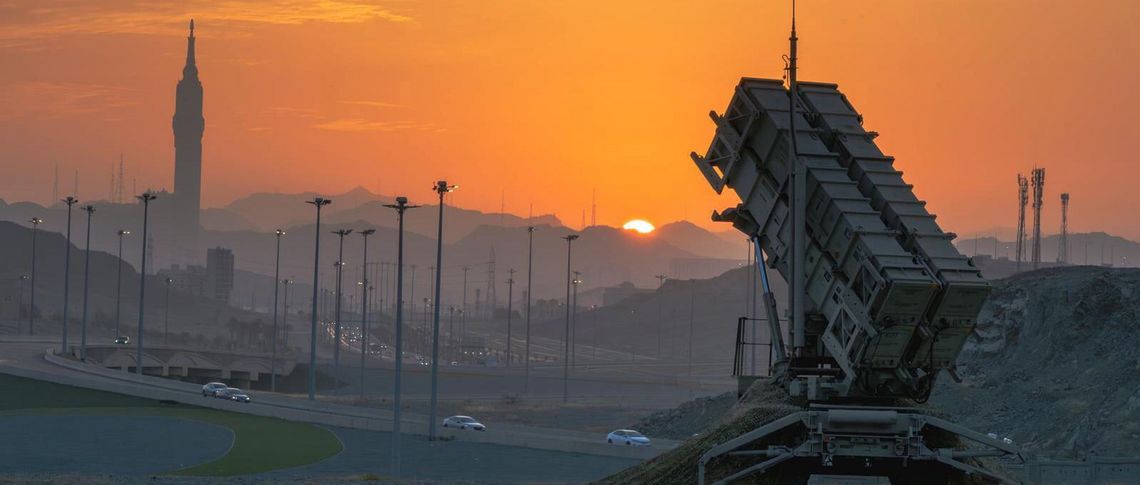
And yet six weeks later, it was precisely this city which was in danger. On the evening of 15 September, Saudi air defences intercepted a hostile drone before it could enter the restricted airspace over Mecca. Riyadh blamed the Houthis, although the group denied targeting Mecca. The interception worked, and no one in the city was harmed. But the perimeter had been tested, and Riyadh itself called the security of the holy sites a ‘red line’. And still, from its two treaty partners, which just mere weeks ago were willing to proclaim a new covenant, came condemnation, sympathy, yet little else.
What matters is the now
Ankara’s explanation for this is more damaging than the silence itself. Turkish officials had already pointed out, after the Houthi attack on the East-West Pipeline, that the pact is not yet binding, and that any response would first require ratification and joint mechanisms. After the Mecca strike, a Turkish official confirmed that Ankara had not yet submitted the agreement for parliamentary ratification and might not do so before October, while Islamabad was still completing its own internal approval process. On top of this, the purpose of the agreement, in their eyes, is long-term collective deterrence rather than rapid reaction to individual crises. That is a defensible reading of a young agreement. It is not a defensible basis for deterrence. Adversaries do not calibrate their behaviour against what a treaty may become; they calibrate it against what it means today. Turkish commentary has been blunter still, warning Ankara against being pulled into the Yemeni quagmire and treating confrontation with the Houthis as a strategic error to be avoided.
In contrast, Islamabad chose a different reaction and managed to be ambiguous in two directions at once. Its defence minister suggested the pact’s provisions could be triggered by Houthi attacks on Saudi Arabia, while its foreign ministry said within a day that no military action was under discussion, and that Pakistan would act when the time came. This despite Pakistan being already bound to Riyadh by a bilateral defence agreement signed in September 2025, with Pakistani troops already deployed in the Kingdom. To add to the confusion, in practice, it did something else entirely, carrying a Saudi warning to Tehran and urging restraint on the Houthis. According to regional reporting, Pakistan’s army chief, Field Marshal Asim Munir, had already been in direct contact with Iran’s foreign minister in the days leading up to the strike, conveying Riyadh’s concerns over further Houthi escalation and urging restraint. Islamabad has played this kind of go-between role before during Gulf-Iran flashpoints, precisely because it has more to lose than to gain from being drawn into direct confrontation with Tehran. But that is the role of a mediator, not an ally, and it reflects Islamabad’s unwillingness to damage its relationship with Iran. Whatever its diplomatic merits, it tells the Houthis precisely what they needed to know.
Deterrence is not a function of outcomes but of expectations, and the expectation now circulating in the region is that the Mecca pact imposes no cost on anyone who tests it.
The predictable objections deserve a hearing, though. Granted, the drone was intercepted. Unsurprisingly, the Houthis deny responsibility. Furthermore, Riyadh never publicly invoked the treaty. And yes, the agreement is barely six weeks old, and its institutions are still being built. Each point is true; however, none of them is reassuring. Deterrence is not a function of outcomes but of expectations, and the expectation now circulating in the region is that the Mecca pact imposes no cost on anyone who tests it. A pact that over-promises and under-delivers does not simply fail to prevent escalation; it quietly rewards it. The escalation, which began before the Mecca drone, has not stopped since: Houthi strikes on the Kingdom’s South on 8 September wounded 73 people and forced the temporary shutdown of damaged oil facilities, and a ballistic missile aimed at Riyadh was intercepted near King Khalid International Airport on 19 September.
Which raises the question Riyadh may find the most challenging. Saudi Arabia went looking for security guarantees in Ankara and Islamabad, capitals with their own rivals, their own red lines and their own reasons to stay out of Yemen. But its Gulf neighbours have none of those complications: they share the same airspace, the same threat and the same need for integrated defence. In reality, the ambition to lead a wider Muslim security bloc may have been pursued at the expense of a tighter Gulf front. The model being reached could resemble, in miniature, what the European Union offered its own members: a transferable set of shared commitments, meant to bind together states with different histories and interests around a common identity. But a values-based bloc of that kind normally takes decades to harden into an operational security guarantee — it is built through repeated crises, not proclaimed complete at a single signing ceremony, which is precisely the gap Mecca’s covenant has not yet closed.
Had that political capital been spent on Gulf cohesion, and had Riyadh tempered its appetite for regional primacy, the response to this escalation might have been closer, faster and more committed; and crucially, the losses of recent weeks smaller. Gulf cohesion has been difficult to achieve for structural reasons: the Gulf Cooperation Council’s own collective-defence ambitions have long run up against rival threat perceptions and diverging foreign policies among its members, from Qatar’s rift with its neighbours to differing postures on Iran, none of which encourage ceding command autonomy to a shared structure.
In truth, ratified obligations, a joint command structure, agreed thresholds for activation and real interoperability would turn a signing ceremony into a real deterrent.
Turkey and Pakistan offered Riyadh something the Gulf could not: large, battle-tested militaries, a nuclear arsenal in Pakistan’s case, and leaders willing to trade prestige partnerships for influence. A more workable Gulf-centred arrangement would likely need to start smaller – shared early-warning systems and standing air-defence coordination between Saudi Arabia and its immediate neighbours, for instance – building operational trust before attempting the kind of sweeping, symbolic commitment Mecca tried to achieve in one signing ceremony.
None of this makes the pact worthless. It makes it unfinished. In truth, ratified obligations, a joint command structure, agreed thresholds for activation and real interoperability would turn a signing ceremony into a real deterrent. Until then, the alliance that took Mecca’s name remains what its critics say it is: ink on paper, unable to shield even the city it was named after.
Until that happens – or until a more credible regional security arrangement emerges – European and Western vessels transiting the Red Sea will have to rely on the protection that only their own navies and armed forces can provide. For Riyadh, this is a further setback: it undercuts the Kingdom’s ambition to be seen, and to act, as a provider of genuine regional security and global connectivity.