At the summit in Ankara on 7–8 July, NATO faces a threefold challenge. First, it must adapt to the changed geopolitical environment, namely the new great-power rivalry, for instance by prioritising collective defence and building capabilities for conventional and hybrid warfare.
Second, the Alliance must ease transatlantic tensions and demonstrate political cohesion externally. These tensions have been triggered by the question of the extent to which European allies should support Washington’s military approach towards Iran and take part in securing the Strait of Hormuz. European reluctance has once again highlighted the divergent strategic priorities within the Alliance. It is precisely for this reason that many hopes are being placed in Turkish President Recep Tayyip Erdoğan. Yet this is where the geostrategic paradox of the summit lies: Türkiye is becoming ever more important for Europe’s security, while political trust in Erdoğan within the Alliance continues to decline.
Third, NATO must strengthen the credibility of its deterrence against Russia. Donald Trump’s description of the Alliance as a ‘paper tiger’ has fuelled doubts about its reliability and weakened its deterrent effect. Differences with Washington are prompting EU states to work towards a European pillar within NATO. In Washington, however, this project must not be misunderstood as a gradual European withdrawal from the transatlantic Alliance.
Political differences
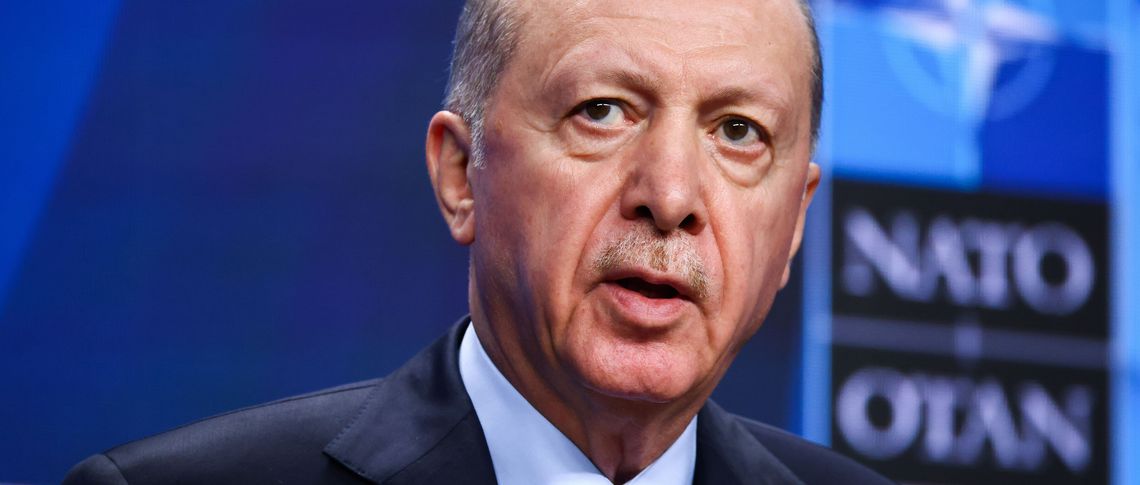
Erdoğan is unlikely to fulfil this role at the summit. His domestic political legitimacy is eroding due to repressive action against the opposition – including the instrumentalisation of the judiciary – as well as economic turbulence. Erdoğan’s current policy is therefore aimed at compensating for this erosion by demonstrating international capacity for action and successful representation of Turkish interests, making him more dependent than ever on foreign policy successes.
Such a success could take the form of demonstrative support for the Turkish President by Trump, for example through a pledge to supply engines for the KAAN fighter aircraft being developed in Türkiye, a visible alignment with the US President or a general upgrading of the country’s status within NATO. Another success would be a breakthrough in deepening cooperation in the defence industry as well as in integration into the SAFE financing mechanism, which is a key priority for Türkiye.
For this very reason, Erdoğan is unlikely to jeopardise his relationship of trust with Trump in favour of the European partners. If he were to do so, he would, in return for his mediation, demand arms and economic cooperation with EU states and deeper integration into the European security architecture. The latter meets little interest in EU capitals. It should also be noted that Erdoğan’s influence on major strategic decisions within the Alliance remains limited despite Türkiye’s geostrategic importance. In many NATO capitals, he is considered a difficult and unpredictable partner. Most recently, the European Parliament called for sanctions against his justice minister.
In Syria policy, as well as with regard to tensions with Israel and the authoritarian course domestically, Ankara depends on Washington’s goodwill.
Notably, Türkiye was not represented when heads of state and government from the so-called E5 group met in Berlin in June to prepare the summit in Ankara. In addition, there are significant political differences with European NATO partners: Erdoğan’s ambivalent policy towards Russia, his positioning in the Middle East conflict in favour of Hamas, and his repeated threats against Greece have further reinforced doubts about his long-term reliability.
Two further reasons explain why Erdoğan is unlikely to contribute to overcoming transatlantic tensions: first, these tensions go far beyond personal relationships between heads of state and government. They are rooted in differing strategic interests, security policy priorities and divergent threat perceptions. Personal diplomacy can at best mitigate these structural differences, but not overcome them.
Second, the relationship between Erdoğan and Trump is characterised by a clear asymmetry. In Syria policy, as well as with regard to tensions with Israel and the authoritarian course domestically, Ankara depends on Washington’s goodwill. The Turkish President will therefore be all the more careful not to strain his relationship with Trump by presenting himself as an independent mediator, and instead seek to secure Trump’s support.
Can Erdoğan contribute to strengthening NATO’s political cohesion?
It can be assumed that the Alliance will reaffirm its support for Ukraine in a unified manner. However, this unity is likely to come at a price. In order not to further strain its own relations with Russia, Ankara will push for the joint communiqué to avoid an overly sharp condemnation of Moscow.
In the run-up to the NATO summit, Turkish Foreign Minister Hakan Fidan travelled to Moscow for several days, consulted President Vladimir Putin and was awarded an honorary doctorate by a Moscow university. He subsequently stated that Russia should not be excluded from the European security architecture. This is likely to have caused discontent not only in Ukraine, but also in many EU capitals. After all, the prevailing view in the EU is that Russia should not be part of the European security architecture even in the post-war period.
Paradoxically, it is precisely these balancing efforts that could further deepen mistrust towards Erdoğan within the Alliance. The more strongly Ankara insists on consideration for Moscow, the greater the doubts in many capitals about Türkiye’s foreign policy reliability are likely to become.
A common strategy is difficult to formulate when its members do not share the same view of where the greatest threat lies.
A further challenge lies in the emergence of a shared perception of threats. While Washington is increasingly focusing its strategic attention on the rise of China and the Indo-Pacific, Russia remains the most immediate security threat for many European states. Ankara, for its part, sees the main risks in the Middle East, where Israeli regional policy and the growing cooperation between Israel, Greece and Cyprus are viewed critically. These differing priorities reveal a fundamental problem for the Alliance: a common strategy is difficult to formulate when its members do not share the same view of where the greatest threat lies.
One of Ankara’s central strategic concerns is the weakening of American engagement in NATO. Although Türkiye would continue to play an important role in NATO even without the United States, the situation would be different in the case of a strengthened European pillar within the Alliance, as promoted in particular by France, Germany, the United Kingdom and Poland. A more European-shaped security model could significantly limit Ankara’s influence. For despite years of effort, Türkiye remains institutionally excluded from the European security architecture.
This is precisely the geostrategic paradox of Türkiye: its military and geographical importance for NATO is steadily increasing. At the same time, political trust in Erdoğan among its allies is declining. The Alliance will not be able to do without Türkiye in the foreseeable future — but it will continue to view it with sustained scepticism.