You describe today’s anti-gender movement as ‘the next wave’. What is meant by this?
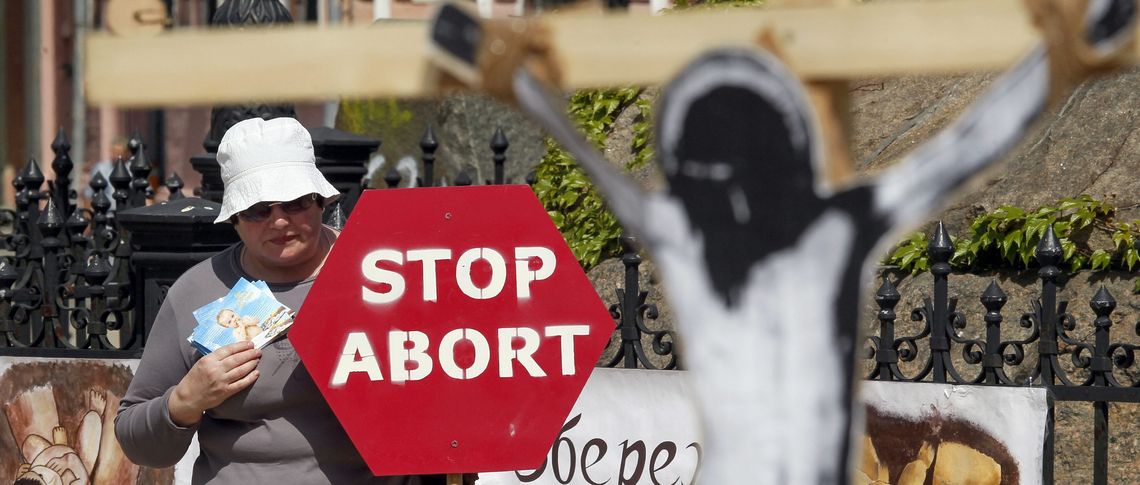
By ‘the next wave’, I mean that in terms of the anti-gender movement – the movement against sexual and reproductive rights, sexual minorities, gender and children – we’re dealing with a fundamentally different movement than what we had become accustomed to. We used to think of it as religious social conservatism, mainly about accommodating certain social values. But what we are dealing with now is a highly organised, strategic political movement with clear ambitions to gain access to power and reshape society.
That is what we need to understand about this ‘next wave’. It is no longer the past anti-abortion activism. It is a political project that is pushing societies towards de-democratisation.
When you say highly organised and strategic, what does that mean in practice?
This movement is highly professionalised. These are no longer amateurs with billboards. They are trained advocates and lawyers who speak several languages and understand how politics and legislative processes work at national, EU and UN levels. And they operate transnationally. These are not isolated local church communities wanting to practise their faith as they choose, but political actors who meet in sophisticated international gatherings to exchange strategies, information and contacts with think tanks and other aligned actors.
That is why we often see very similar legislative initiatives appearing in different countries at almost the same time. This is not grassroots social conservatism. It is strategic political engineering.
Another important aspect is that the movement is no longer driven only by older religious conservatives. We see young people – women as much as men – becoming active in these networks because they see opportunities, whether religious, political or career-related, within this broader ecosystem.
What role does religion itself still play in all of this?
Religion plays several roles. First, it is the point of origin for the intellectual framework used to contest gender equality and sexual and reproductive rights.
A colleague of mine, David Paternotte, described this anti-gender thinking as a kind of Frankenstein’s monster — not because it is ugly, but because it is an artificial construction that escaped the control of its creators. It began as an intellectual project among Catholic thinkers, was adopted by the Catholic Church and other faith-based organisations and religious institutions, and then spread far beyond them into civil society and politics.
Today, anti-gender ideology exists in many forms and is used by very different actors. Some use it as a tool for de-democratisation and illiberal politics. Others use it to justify broader forms of inequality. In some cases, these groups are even openly hostile to the Vatican itself.
Three broader trends stand out here. First, these religious communities have generally become more socially conservative in doctrinal terms. Second, they increasingly encourage believers to become politically active. And third, we have seen the emergence of church-linked NGOs operating within civil society, often functioning as extensions of religious hierarchies.
There is nothing inherently illegal or anti-democratic about that. But we need to understand clearly who these actors are and how they operate.
Can you give some examples of the real-life impact this movement has had?
This movement has reshaped politics as we know it in many countries, and in some cases, they’ve been able to gain access to power. So this movement has actually shaped the daily lives of many, many people across much of Europe and beyond.
At the political level, many countries are now only one or two elections away from the far right entering government. And the consequences could be significant. These actors want to cut funding for a whole range of issues that form the bedrock of liberal democracy: women’s rights, human rights, free media, academic freedom, environmental protections, social protections and consumer protections. These are all up on the chopping board. Development aid to the Global South could also be reduced.
There are also direct human consequences. Some people from sexual minorities no longer feel safe in their own countries and have left behind their families, communities and cultures as a result. In Poland, at least six women are known to have died because they could not access abortion care. This was not due to a lack of medical capacity or financial resources — it was ideological. Many of these women had wanted to be pregnant, but complications during pregnancy were not treated because of the legal situation. These are the kinds of impacts people often do not anticipate.
This movement clearly has access to enormous financial resources. Where does that funding come from?
We were able to identify almost $1.2 billion over a five-year period circulating within the European anti-gender ecosystem. And that is a very conservative estimate because we still have major data gaps in countries such as Germany and Austria, and because dark money, by definition, is difficult to trace.
Of that $1.2 billion, just over $700 million comes from within the EU itself. The biggest sources are Hungary, France and several larger member states. Hungary is particularly interesting because much of the funding can be traced back to the state under Viktor Orbán.
Another major source is Russia, accounting for around $200 million. What is interesting there is that the system became decentralised away from the Kremlin itself and into networks of private actors and oligarchs close to the regime. These actors created so-called influence factories aimed at gradually socialising Western elites into a pro-Russian agenda.
When the sanctions kicked in in 2014 and expanded in 2022, that Russian system weakened. But then Hungary stepped in with very similar structures: think tanks, NGOs and transnational political networks funded by these oligarchs. We also see direct financial support for far-right political parties, first from Russia to parties such as Front National and Lega, and then from Hungarian banks to parties including Rassemblement National and Vox.
We also see funding coming from the United States, particularly from billionaires close to the MAGA movement. Through private foundations, they fund US-based organisations, law firms and NGOs, which then establish partnerships across Europe, Africa, Asia and Latin America.
One example is The Heritage Foundation working with the Italian think tank Centro Machiavelli to bring one of the leaders of the foundation to speak in the Italian Chamber of Deputies. Another is Alliance Defending Freedom International, the organisation involved in overturning abortion rights in the United States, which now has offices in several major European decision-making centres, including Geneva and Vienna, with the aim of influencing laws and policies.
Since such a large share of the European funding comes from Hungary, do you see hope for change with the new government?
Hope, yes. But we still need to see what actually happens. The scale and complexity of the Hungarian funding system are immense.
Prime Minister-elect Magyar has already said he wants to investigate public funding going to organisations such as the Conservative Political Action Conference, which brings together far-right and MAGA-aligned actors from around the world. But CPAC is only the most visible part of a much larger system.
The real question is whether the new government will be able to identify all the different funding channels and whether there are mechanisms to stop or even recover some of that funding. My concern is that parts of the system may have been designed to outlast Orbán’s premiership.
These developments are not limited to Europe or the United States. How is this movement spreading globally?
I would say there are four main centres of origin: the United States, Latin America, Europe and Russia — each with its own flavour. From there, it has spread first of all into sub-Saharan Africa, where there is genuine local demand for this type of movement. We also see expansion into parts of Asia and the Pacific.
In some cases, local religious communities find validation in their own worldview through international partnerships. In others, political actors look at figures such as Donald Trump in the US or Antonio Kast in Chile and conclude that adopting a similar formula could help them electorally.
There is often funding attached to these networks as well. And in some countries, anti-gender politics is increasingly piloted as a state project. We have certain powerful political actors who are on a sliding scale towards illiberalism and see that they’re able to use religion and social norms as a way to whitewash what are basically anti-democratic slippages.
What can be done in response?
First, we need to expose and disarm these networks more effectively. We can only respond properly if we understand who these actors are and how they operate. If organisations such as CitizenGo, a far-right group based in Madrid, are suspected of receiving Russian funding, journalists, politicians and the public should know before these actors gain influence.
Secondly, we need to dislocate them from centres of power. Many of these organisations have cute names, such as ‘Alliance Defending Freedom’. They’re not the ‘International Group of Extremists Against All Human Rights’. Politicians, media and civil society need a clearer understanding of who they are dealing with.
Next, we need to demonetise them. There are opportunities, particularly in Hungary, to address public funding streams. We also need other strategies and stronger mechanisms for financial transparency regarding private funding.
Finally, we need to defend democratic norms and institutions more actively. We need to understand that issues that once seemed politically settled are now being reopened. The Istanbul Convention is a good example. Fifteen years ago, many assumed it would pass without serious opposition because it dealt with gender-based violence — and who’s against that? Few anticipated the scale of mobilisation against it.
At the same time, people defending these issues are increasingly targeted. Moldovan President Maia Sandu was subjected to massive Russian gendered disinformation campaigns. In Poland, Marta Lempart, one of the organisers of the women’s strike movement, has faced more than 100 lawsuits. We need systems that can protect people on the front lines of these attacks.
This interview was conducted by Alena Bieling.