Europe is rearming on a significant scale. Given Russia’s war of aggression and an increasingly uncertain world, this is understandable. Yet the security policy debate is increasingly creating the impression that defence and deterrence are the only serious responses to the new threats. Arms control and disarmament, by contrast, are quickly dismissed as relics of a bygone era — naïve at best, irresponsible at worst.
That is a mistake. Security policy priorities and arms control are currently being pitted against each other, even though they belong together. Precisely when states are investing more money in defence, developing new weapons systems, and private companies are gaining influence in the security sector, rules are needed to place limits on military force.
Germany played an important role in this area for decades, helping to advance international processes to regulate weapons and ammunition. Today, this commitment risks being pushed into the background. The Bundestag (German parliament) recently spent barely half an hour debating arms control. Even during extensive discussions on reforms to humanitarian aid and development cooperation, arms control and prevention barely featured.
Yet we are by no means starting from scratch. International treaties, institutions and experience already exist on which Germany and Europe can build. Declaring them ineffective simply because geopolitical conditions have become more difficult would be the wrong conclusion.
When the rules start to fray
The Ottawa Treaty banning anti-personnel mines demonstrates this. Since it entered into force, the number of annual victims of anti-personnel mines has fallen from around 26 000 to roughly 5 000. The treaty has also mobilised financial resources for mine clearance, training and awareness-raising. And this is despite the fact that major powers have never joined it.
Arms control therefore does not only work when every state in the world participates. Treaties can establish international norms, influence political behaviour and put states under pressure to justify their actions. Around 80 per cent of the international community continues to support the ban on anti-personnel mines.
That is precisely why recent developments are alarming. Latvia, Finland, Lithuania, Poland and Estonia have decided to withdraw from the treaty, citing the threat posed by Russia. Ukraine, which itself is suffering from Russia’s extensive use of mines, has also used anti-personnel mines since 2022, according to Human Rights Watch, thereby violating its obligations.
Ninety per cent of victims of anti-personnel mines are civilians.
That states under acute military pressure are questioning existing restrictions is understandable. But that is precisely where the danger lies. If humanitarian rules are abandoned whenever the security situation becomes more difficult, they lose their effectiveness precisely when they are most urgently needed.
Lebanon chose a different path. In the midst of a severe security crisis, the country joined the Mine Ban Treaty in June as its 162nd state party. At the meeting of states in Geneva, the Lebanese government warned that ‘measures intended as defensive can turn into lasting constraints’. Mines may serve military purposes in the short term. But their consequences often last for decades: they prevent displaced people from returning, make farming and reconstruction more difficult and continue to kill long after a war has ended.
The humanitarian consequences are considerable. Ninety per cent of victims of anti-personnel mines are civilians. Modern warfare has not solved this fundamental problem either. In 2025 alone, more than 22 000 civilians were killed by explosive weapons in densely populated areas. The increasing use of drones does not automatically protect civilians either. According to the monitoring platform ACLED, the number of attacks on humanitarian workers and critical infrastructure such as schools also quadrupled in 2025 compared with the previous year.
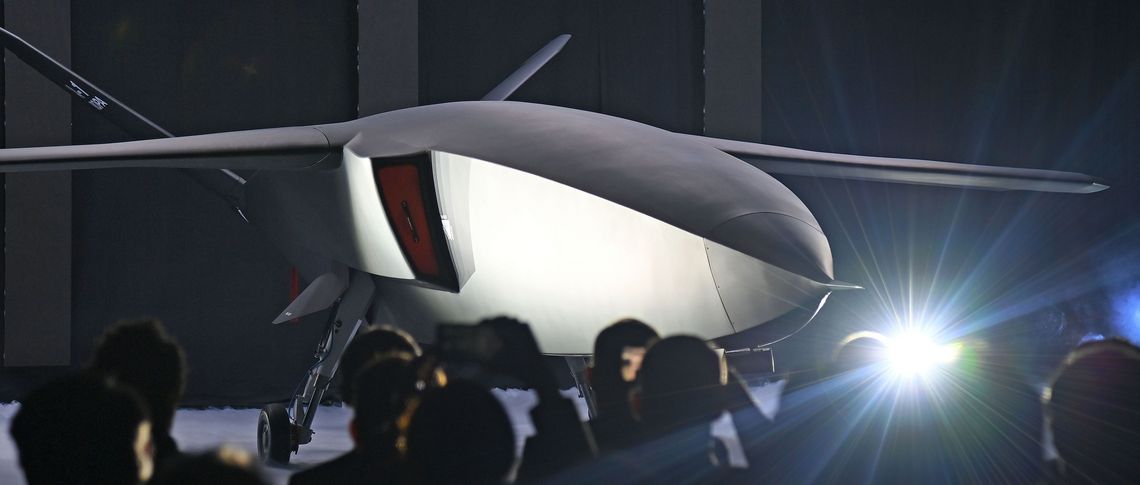
The very technological developments taking place therefore speak not against arms control, but for new forms of it. Autonomous weapons systems, including armed drones, as well as the use of artificial intelligence and dual-use goods, are rapidly changing the way wars are fought. National rules alone are not enough here.
New weapons, new rules
Here, too, the international community is by no means starting from scratch. The Arms Trade Treaty already provides a framework for international trade in conventional weapons. In Geneva, negotiations on human control over autonomous weapons systems have been under way for years, and since 2023 also on artificial intelligence in the military domain. The European Parliament has also addressed the issue in an extensive resolution.
These processes are arduous. Authoritarian great powers instrumentalise international law for their own interests, states block negotiations and private companies are gaining importance in the development of military technologies. But this does not mean that international rules have become obsolete. On the contrary: the faster military technologies develop and the more actors gain access to them, the greater the need for common limits.
This also applies to Germany. It has a vested security interest in strengthening international rules, precisely because the rules-based limitation of military power is under pressure. Arms control now encompasses far more than traditional disarmament treaties. It ranges from clearing explosive remnants of war and securing ammunition to combating the illicit arms trade, regulating new technologies and establishing confidence-building measures between states.
Defence capabilities and arms control are not opposites.
The new European security environment is forcing Germany and its partners to talk more about defence capabilities. That is necessary. But it must not lead to a black-and-white security debate in which any limitation on military power is portrayed as weakness.
Humanitarian arms control is not an alternative to defence capabilities. It addresses the point where military necessity and humanitarian consequences collide. Its task is not to make conflicts disappear through good intentions, but to limit their consequences, establish common rules and preserve room for diplomacy.
This is particularly important for middle powers and smaller states. They cannot compete militarily with the great powers, but they can work together to shape rules and create international norms. The Ottawa Treaty shows that such alliances, particularly when working alongside civil society, can have an impact even when powerful states initially stand aside.
Germany has experience in this field, as well as diplomatic instruments and international partners. Rather than writing off arms control as a project of the past in the face of new threats, it should make greater use of these capabilities again. Defence capabilities and arms control are not opposites. Precisely because military strength is becoming more important again, political rules are needed to place limits on it.