


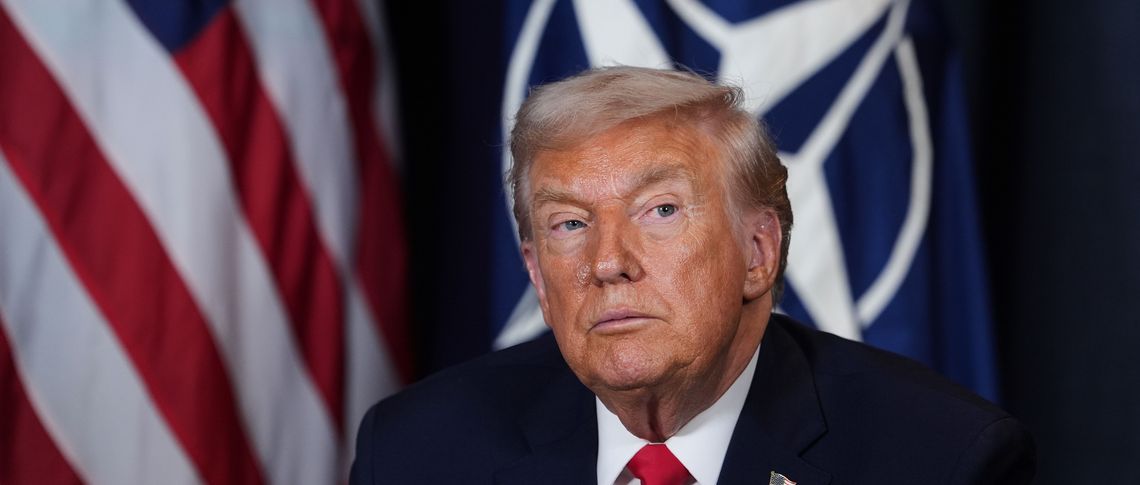
On 1 April, US President Donald Trump threatened to withdraw his country from NATO — and this was evidently no April Fool’s Day prank. Irritation over the course of the war with Iran and the apparent unwillingness or inability of European allies to help Washington reopen the Strait of Hormuz or join the military operations in any other way led Trump to adopt such tough rhetoric. Even if nothing comes of this threat, statements like this have the potential to significantly alter the global security landscape and call into question the conventional methods of defending America’s national interests.
But words can turn into actions. That said, the legal details could present an obstacle here. It is unlikely that Trump would be able to withdraw the US from NATO just like that: in 2024, a special law was enacted on this matter, explicitly prohibiting the president from taking any such action without the consent of two-thirds of the Senate or approval via an Act of Congress.
When it comes to alliances, however, political will and the interpretation of signals are even more critical: even if Trump decides to formally remain in NATO, there is a great deal he could do to undermine faith in Article 5 of the Washington Treaty, erode the allies’ confidence and strip NATO of its deterrent capability — along with its entire raison d’être. So the question is not so much whether Trump could pull the US out of NATO but rather to what extent such a move would serve the country’s strategic interests.
A shifting international order
Here, the situation is more nuanced, since there is no consensus on what actually constitutes America’s key interests; just as there is no ready-made formula for success when it comes to defending them. This is part of a wider debate on global leadership and its cost. The American elite is divided, and the question of preserving America’s status is more critical than ever.
The reality is that the global balance of power is shifting rapidly — and not in favour of the United States and the West as a whole. Under these conditions, Washington faces the classic problem of overstretch (imperial, hegemonic or leadership-related — the choice of words depends on the context). When the US accounted for a quarter of the global economy and Japan – which was then both its closest rival and ally – just 12 per cent, the Alliance served to boost Washington’s global influence and played a pivotal role in advancing its geopolitical interests.
But times have changed. In terms of purchasing power parity, China’s economy is now nearly 1.5 times the size of the United States’. The economic potential of the Global South has already surpassed that of the West. The remnants of the international order, once established by the US and the West, can slow down and mitigate the loss of hegemony, but cannot stop it completely.
The key region for future global development – be that economic, social, political or technological – is no longer Europe, but East Asia. Against this backdrop, America’s grand strategy was bound to change, and with it, NATO’s place in the US order of priorities.
The Europeans’ stance during events surrounding the Strait of Hormuz could later be used as an excuse for inaction.
And this has indeed happened. The ‘America First’ approach calls for a re-evaluation of the country’s role in the world, specifically by ending its disproportionately high spending on collective mechanisms, whose benefits are enjoyed by everyone but paid for primarily by Washington. One such mechanism is the security guarantees provided by the US, including those established within the framework of NATO. Allies benefit from these guarantees, but they do not pay for them, at least not very much — hence the US president’s calls, indeed demands for NATO member states to increase their defence spending to 5 per cent of GDP. Trump’s rhetoric also signals a reluctance to get dragged into protracted military conflicts, especially by US allies, though the war with Iran has raised serious doubts about the consistency of his views.
Assuming the situation in the Middle East has simply spiralled out of control and not gone according to plan, Trump’s strategy remains a shift away from liberal internationalism and a return to a selective foreign policy with elements of isolationism, increased pragmatism and more cautious assessments of military capabilities and costs. Avoiding unnecessary risks and forced decisions is a key element of this strategy.
In this context, the issue of allies’ obligations appears in a markedly different light. Allies are no longer an unqualified asset that helps strengthen US influence; they are also a source of risk due to their ability to draw Washington into questionable, damaging and costly conflicts. One of these, according to Trump, is the Russo-Ukrainian war. If we were to take this line of reasoning to its logical conclusion, America’s withdrawal from NATO – or at the very least a taboo against completely fulfilling alliance obligations – should be perfectly acceptable to the current administration.
The Europeans’ stance during events surrounding the Strait of Hormuz could later be used as an excuse for inaction — after all, Article 5 of the Washington Treaty does not prescribe a mechanism for joint action of allies, instead leaving the decision up to the individual states.
For proponents of American neo-isolationism, nothing in NATO is sacred anymore. This Cold War instrument has served its purpose. It subsequently helped America to expand its influence, but its time has passed — and if a pragmatic power vs risk calculation does not favour preserving NATO, leaving the Alliance is a realistic option.
Without the Alliance, Washington would either have to increase its own military presence in Europe or accept the fact that the balance of power there will be shaped without its involvement.
However, there is another side to the coin. In times of decline, a former hegemon’s allies are often its main asset. Cutting back too drastically on US international commitments may save resources but will open regions up to Chinese influence — and ultimately leave Washington to face Beijing’s growing power alone. At the end of the day, NATO does not cost the US very much — the organisation’s budget is modest, and so, too, is America’s share of it. But without the Alliance, Washington would either have to increase its own military presence in Europe or accept the fact that the balance of power there will be shaped without its involvement. America’s withdrawal from NATO would not so much be a cost-saving measure as a loss of leverage. Europe taking more autonomy over its own security does not necessarily conflict with US interests, but it does carry a lot of uncertainties and risks. In the long term, it will diminish America’s ability to set the rules of the game, not only in Europe, but in the broader Euro-Atlantic region.
Another potential problem is a loss of confidence in US security guarantees in other regions. Allies who lose faith in these guarantees may begin to seek their own defence autonomy or, for example, to acquire nuclear weapons. Whether de facto or legal, the dissolution of NATO would, of course, strengthen Russia’s position in Europe, radically shifting the balance of power in its favour. In the long run, this could lead to more instability and conflict, and thus more problems for the United States. The world that would emerge as a result of such changes is unlikely to be one that is more favourable to American interests.
In sum, NATO continues to fulfil a crucial role that is difficult to achieve through other means: it institutionalises US leadership, enabling the conversion of the country’s military and economic power into political influence. Withdrawing from NATO would give the US a short-lived sense of freedom. The main objective this step might hypothetically achieve is to reduce the risk of being drawn into an unnecessary war. The cost of this would be reduced influence in Europe and the world at large. For now, however, there is a simpler and more reliable path for American neo-isolationists. This approach consists of increasing NATO’s deterrent potential at the expense of the Europeans, shifting part of the responsibility and risks onto them and retaining the freedom to interpret the content of Article 5 of the Washington Treaty.


