


The war with Iran has rapidly evolved from a regional military confrontation into a shock to the global energy system. Even before its beginning, analysts outlined a series of possible scenarios that could unfold. Among the most widely discussed were attacks on Iran’s own oil infrastructure that could cause permanent damage, a tightening blockade on Iranian oil exports, or the disruption of shipments from the critical export hub of Kharg Island. Other scenarios described retaliation from Tehran: strikes on Gulf oil and gas infrastructure — from pipelines and refineries to production fields — or, most dramatically, the closure of the Strait of Hormuz.
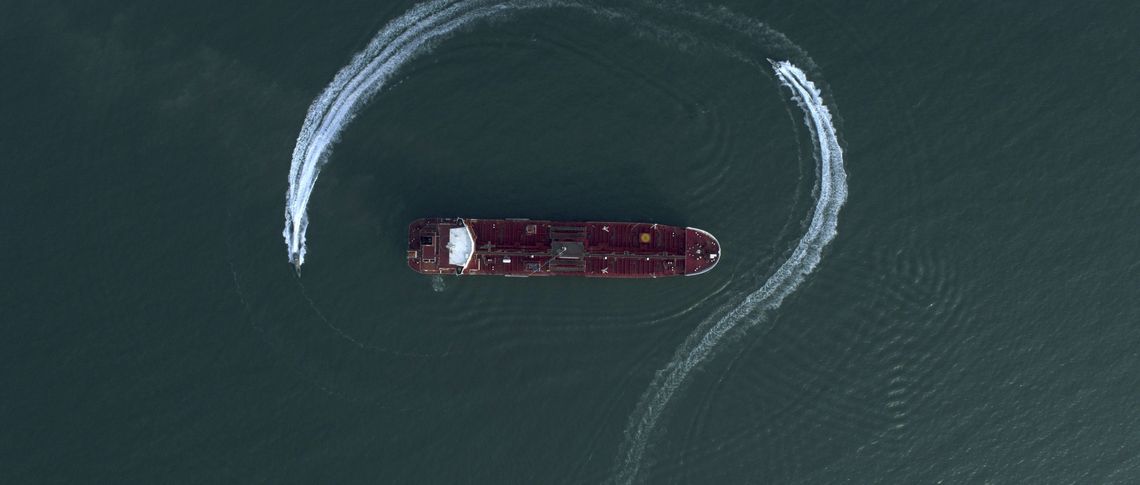
When the war began on Saturday, 28 February, Iran moved quickly to deploy what has long been considered its most powerful strategic card: the threat to shut down the Strait of Hormuz. Rather than immediately relying on sea mines, Tehran signalled its intent by threatening commercial fleets and targeting vessels moving through the waterway. The impact was immediate. Maritime insurance premiums surged, making passage through the strait prohibitively expensive and prompting many shipping companies to reroute or suspend operations altogether.
When the survival of a regime is at stake…
Iran also did not hesitate to expand the battlefield to the wider Gulf energy system. From the first days of the conflict, Iranian strikes targeted oil and gas infrastructure across several Gulf states. Pipelines, refineries, and energy facilities became part of the confrontation. The consequences were swift and severe. Qatar, one of the world’s largest exporters of liquefied natural gas (LNG) declared force majeure on part of its production, halting shipments. Global LNG markets reacted almost instantly, with prices climbing sharply as traders assessed the scale of the disruption.
The closure of the Strait of Hormuz compounded the shock. Several Gulf producers rely on the strait as the main route for exporting their crude. Countries such as Iraq and Kuwait soon faced a logistical problem: with tankers unable or unwilling to transit the strait and limited domestic storage capacity, production had to be curtailed. The result was a sudden contraction in global oil supply.
Markets responded predictably. Just a week into the conflict, oil prices surged past the three-digit threshold, rising from roughly $72 per barrel on Friday, 27 February to well over $100. Energy markets had long feared a ‘Hormuz scenario,’ but few expected it to materialise so quickly or so decisively. But such measures should not come as a surprise when the survival of a regime is at stake.
By raising the economic cost of war for the international community, Tehran likely hopes to accelerate diplomatic pressure for a ceasefire before the conflict can weaken the leadership in Tehran.
For the Gulf countries, the attacks came as a shock. Many of them had opposed the outbreak of war with Iran and sought to avoid being drawn into the confrontation. But for Tehran, targeting the Gulf’s energy infrastructure was a deliberate strategic calculation. By inflicting immediate economic pain on its neighbours and disrupting the global energy system, Iran appeared to be attempting to create pressure for a rapid end to the war. The message was clear: the longer the conflict lasts, the more the global economy and especially the energy-dependent economies of the Gulf will suffer. If Iran will go down, the Gulf countries should suffer to the maximum, seems to be the thinking in Tehran.
This strategy reflects a broader Iranian objective: ensuring the survival of the regime. By raising the economic cost of war for the international community, Tehran likely hopes to accelerate diplomatic pressure for a ceasefire before the conflict can weaken the leadership in Tehran.
Yet the strategy has created a profound dilemma for the Gulf countries. On the one hand, they have little interest in prolonged instability that damages their economies and undermines their reputation as reliable energy suppliers. On the other hand, a rapid end to the war that leaves Iran politically and militarily emboldened could pose an even greater long-term threat.
In other words, Gulf states face a difficult strategic choice. Should they push for an immediate end to the conflict, potentially allowing Tehran to claim a form of strategic victory? Or should they absorb the economic pressure in the hope that a longer conflict will weaken Iran’s leadership and lead to either a change in its regional behaviour or perhaps even a deeper transformation of the regime itself?
No immediate way out
Recent political signals from Tehran suggest that the leadership is preparing for a prolonged confrontation. The appointment of Mojtaba Khamenei, the son of Supreme Leader Ali Khamenei, as the successor to his father has been widely interpreted as a sign of regime consolidation rather than compromise. Such a move indicates that Tehran may be willing to sustain the conflict despite its economic costs. For Gulf states, this raises an urgent question: should they respond collectively to what they perceive as an increasingly uncompromising Iranian leadership?
While Gulf governments weigh their options, Europe is watching the unfolding crisis with growing anxiety. The impact of disruptions in Gulf energy flows is already being felt across European markets. When Qatar announced force majeure on its LNG production, European gas prices reacted almost immediately. Benchmark prices surged toward €70 per megawatt-hour, more than double the roughly €30 level seen before the escalation.
This surge comes at a particularly sensitive moment for Europe’s energy system. Between April and November, European countries typically replenish their gas storage ahead of the winter heating season. But the replenishment period coincides with rising demand in Asia, where LNG consumption increases during the summer cooling season. The result is an increasingly intense competition for limited LNG cargoes.
In such a market environment, financial capacity becomes decisive. Wealthier economies, whether in Europe or Asia, will be able to secure LNG supplies even at elevated prices. But lower-income countries will struggle to compete. The situation echoes the early months of the war in Ukraine in 2022, when soaring LNG prices forced several developing countries, such as Bangladesh, out of the market.
The crisis may strengthen the case for accelerating the energy transition toward renewables, which offer greater insulation from geopolitical shocks.
Some governments may turn to coal as a temporary substitute to maintain electricity supply. Others will likely accelerate investment in renewable energy as a means of reducing their exposure to volatile fossil fuel markets. Yet neither option provides an immediate solution to the structural vulnerability exposed by the crisis.
Ultimately, the conflict highlights a deeper question for global energy security: how much should the world economy depend on a single maritime chokepoint? Roughly a fifth of the world’s oil trade passes through the Strait of Hormuz. As the current crisis demonstrates, disruptions in that narrow waterway can reverberate across the global economy within days.
For Europe and other energy-importing regions, the lesson may be clear. Diversification of suppliers, routes, and energy sources will likely become an even more central pillar of energy strategy. This could mean investing in new pipeline corridors, developing alternative LNG supply chains, or expanding partnerships with producers outside the Gulf. At the same time, the crisis may strengthen the case for accelerating the energy transition toward renewables, which offer greater insulation from geopolitical shocks.
Whether the war ultimately reinforces fossil fuel diversification or accelerates the shift toward clean energy remains an open question. What is certain, however, is that the conflict has already reshaped the geopolitics of energy in the Gulf and reminded the world that energy security remains inseparable from geopolitical stability.


