On the heels of America’s 250th anniversary, I felt the curious need to resist my usual penchant for economic and geopolitical analyses of claims made for or against the United States. Instead, I surrendered to an emotional, personal, indeed an Athenian, take on the global hegemon whose development and actions have shaped us all.
My earliest memory of America as a factor in my life harks back to a hot afternoon in early June 1968. A little more than a year after a CIA-backed coup had placed Greece under a fascist dictatorship, my mother and I were strolling outside the revamped ancient stadium where the first modern Olympic Games had been held in 1896. A newsboy suddenly broke the calm, announcing, at the top of his voice, that some American was dead. My mother’s eyes filled with tears. ‘He was our last chance,’ she said.
The dead American was Robert F. Kennedy, on whom my mother had, rightly or wrongly, pinned many hopes, not only for our liberation here in Greece but also for world peace. It would be my crash course in America’s significance to us all, as well as to its internal contradictions.
There had, of course, been previous news flashes of soul-crushing American murders, particularly those of Martin Luther King, Jr. and Malcolm X. And in the years that followed, the news featured daily horrors from Vietnam and the intricacies of Watergate. Yet these were balanced by the poignant, nuanced, and aesthetically sophisticated American critiques of it all.
The loss of self-critique
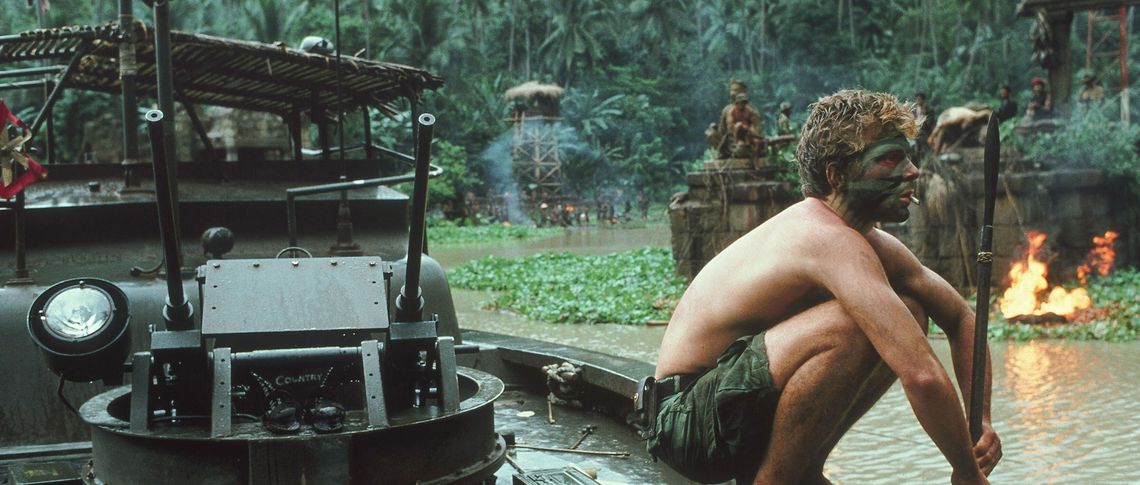
Is there a better way to grasp the criminal insanity of the Vietnam War than Francis Ford Coppola’s Apocalypse Now? Or a better exposé of endemic corruption in California than Roman Polanski’s Chinatown? Or of Watergate than Alan Pakula’s All the President's Men? Or a better depiction of the CIA’s weaponization than Sydney Pollack’s Three Days of the Condor? Or a better portrayal of the country’s dangerous underside than Coppola’s The Godfather or Martin Scorsese’s Taxi Driver?
As I got older and began to read difficult books, it was American authors that opened windows from which I could glimpse America’s exhilarating vistas of contradiction. Thorstein Veblen’s The Theory of the Leisure Class gave me a better understanding of American capitalism than any economics text, conventional or polemical. John Steinbeck’s The Grapes of Wrath impressed upon me the dreadfulness of the Great Depression, and an appreciation of the subsequent New Deal, in ways that no economist ever matched.
Turning to music, rock ‘n’ roll was my gateway into rhythm and blues, which was my tutor into what American freedom, or lack thereof, was all about. Could there be a better summary of how Hegel’s dialectical concept of freedom was fused into the American South than the line from that splendid blues song originally performed by Ray Charles and later by Solomon Burke, ‘None of us are free, if one of us are chained’?
They recognised that authentic tragic heroes — such as Oedipus, Antigone, and Prometheus — are not inherently good or bad; like most Americans, they acted according to their own profound sense of justice, to a ‘truth’ they felt bound to uphold.
Years later, the sculptures of Donald Judd in Marfa, Texas, helped me realise the importance of manufacturing in fashioning America’s cultural imprint. It was there that I first recognised how the artefacts of American industry — the unadorned facticity of its industrial materials — had shaped our understanding of our surroundings and the interplay of light and volume, even here in Europe.
Those were the times when a communal creative introspection swept across America, redolent of the possibility of catharsis. As Aristotle explained in his Poetics, tragedy was never about entertainment; it was a civic courtroom.
This is what America’s authors, musicians, and filmmakers were doing: they were putting their deepest anxieties on trial. They recognised that authentic tragic heroes — such as Oedipus, Antigone, and Prometheus — are not inherently good or bad; like most Americans, they acted according to their own profound sense of justice, to a ‘truth’ they felt bound to uphold.
Their tragedy was that the universe, or more likely the polis, turned their actions into opposing, crushing forces. Through witnessing the resulting suffering, the audience’s own pent-up pity and terrors are purified and drained away. That is the moment of catharsis that America, in the end, was denied.
For more than four decades, a global class war has been waged against working people everywhere, and in the US in particular, preventing a purifying resolution of America’s tragedy.
What robbed Americans of their catharsis was the economy’s violent switch from surplus producer to deficit generator, symbolised by the Nixon Shock of 1971, which killed the Bretton Woods system. By the 1980s, the films and books I loved were replaced with paragons of crass jingoism like Rambo, Top Gun, and Francis Fukuyama’s The End of History.
Of course, the capacity for self-reflection was not entirely lost. America’s cathartic moment was snuffed out because its elites succeeded in turning US deficits into a source of immense, uncouth strength. As foreign capital enthusiastically poured profits and rents into New York City, Oliver Stone’s Wall Street captured the resulting rise of the Gordon Gekkos.
Stone’s film came at the start of an era in which the stability of American power has been accompanied by steadily expanding economic precarity — a process that has impoverished many in the US and the rest of the West while enabling owners of substantial dollar-denominated capital to become fabulously wealthy. For more than four decades, a global class war has been waged against working people everywhere, and in the US in particular, preventing a purifying resolution of America’s tragedy.
Quite the contrary. Financialization and, more recently, the rise of cloud capital, Big Tech, and AI, are solidifying the schism within American society that eventually begat Donald Trump’s presidency. Consequently, America is now producing a mindless, raw power and exponentially growing instability. The possibility of catharsis that characterised America at its bicentennial is hard to envisage a half-century later — to the detriment of us all.