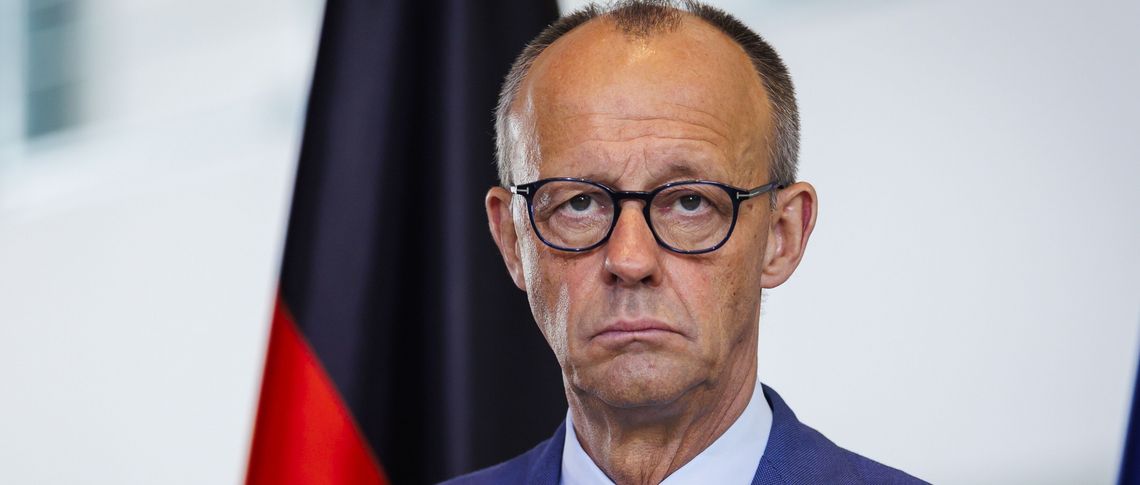
In his first government policy statement, Chancellor Friedrich Merz emphasised: ‘We need to work more again in this country, and above all more efficiently. We will not be able to preserve this country’s prosperity with a four-day week and work-life balance.’ Leading CDU/CSU politicians are also calling for cuts to the welfare state, ranging from reductions in the citizen’s benefit (Bürgergeld) and tougher sanctions to a longer working life. At the same time, business associations are sounding the alarm: operating costs are too high, and Germany is no longer internationally competitive.
It is almost as if neoliberalism had not run aground during the Global Financial Crisis and the German economy is now to be saved through cost-cutting. The problem is not the diagnosis: energy costs in Germany are indeed too high, public finances are under strain, government regulation stifles innovation, and bureaucracy hampers entrepreneurial dynamism. At the same time, industry is losing international competitiveness so rapidly that the country faces the threat of deindustrialisation. The real problem is that the neoliberal remedies come from a world that no longer exists and can cause great damage in the wolf world.
At the height of globalisation, the United States used its power to promote the free movement of capital, goods, and people. Following David Ricardo’s logic, free trade was supposed to increase prosperity for all. Nation states, with their bureaucracies, borders, and welfare systems, were regarded as obstacles to market efficiency. The neoliberal state was therefore expected to limit itself to competing for international investors through low wages, taxes, and social contributions. Yet despite generous subsidies, companies relocated production and administration abroad. Today, the exhausted working and middle classes in the Rust Belts prefer the economic nationalism of right-wing populists to the ‘business as usual’ of liberal elites. Nevertheless, Germany, the moribund patient, is once again being prescribed bloodletting.
The old tricks no longer work
The medicine of the previous century no longer works under the conditions of the wolf world. Ironically, it is the hegemon itself that has turned away from the liberal economic order it created and guaranteed for decades. Across party lines in the United States, the conviction has been growing for years that turbo-globalisation enriched a small elite while harming the broad majority. Donald Trump’s trade war may be particularly aggressive, but it stems from the same scepticism towards free trade that left-wing critics of globalisation had already articulated. Both Biden and Trump promised to bring industrial jobs back to America’s hollowed-out heartland and to undermine rival China through restrictions on technology exports. The heavily indebted country is tired of being the consumer of last resort. As a result, the growth engine that drove the global economy for decades is disappearing.
China has responded to American economic nationalism with export restrictions on rare earths and a heavily subsidised industrial policy. Europeans and Asians are erecting tariff barriers against Chinese overcapacity. This protectionist wave marks the end of free trade. By shifting their reserves from US Treasury bonds into gold, the BRICS countries are attempting to deprive the United States of a central instrument of its sanctions policy. If they succeed, the position of the US dollar as the world’s reserve currency will begin to falter.
The logic of security is displacing the logic of the market.
The capital requirements for energy and data-centre infrastructure have now become so immense that even financial markets, inflated by decades of monetary expansion, can scarcely finance them on their own. This is why the savings of pension funds are increasingly being mobilised through stock market listings. Above all, however, the technology industry and the state are becoming ever more closely intertwined. Whether infrastructure, military contracts, research funding, or state intervention to shield and open markets, technology oligarchs are entering into ever deeper alliances with states. The irony of this development is that the same Western elites that loudly proclaim systemic rivalry with China are simultaneously accelerating the adoption of Beijing’s model of state-capitalist developmental authoritarianism.
Anyone hoping that a new president in the White House will once again transform the economic order is likely to be disappointed. The United States has for years been overstretched militarily, financially and politically. Challenged by Russia in Europe, Iran in the Middle East and China in East Asia, it can no longer fight two or even three wars simultaneously as it did at the height of its power. National debt, soon reaching 39 trillion dollars, is fuelling nervousness in financial markets and raising doubts about the fiscal health of the issuer of the global reserve currency. Domestic pressure is also mounting: the revolt against endless wars shows that the American public is weary of war.
In the wolf world, investment decisions concerning technologies, infrastructure, and supply chains are increasingly driven by geo-economic considerations. The paradigm is shifting from efficiency (‘just in time’) to resilience (‘just in case’). The logic of security is displacing the logic of the market. Yet Germans still believe that in this world, where geo-economic competition is conducted with ruthless determination and sometimes even by military means, they can prevail through a few cost optimisations from the toolbox of neoliberal competitiveness policy. This not only underestimates the scale of the techno-industrial transformation but also aims at conditions that no longer exist.
More Friedrich List than David Ricardo
The German economy cannot export its way out of crisis if markets are closing. German companies cannot survive in low-wage havens where they are left defenceless against the economic nationalism of competing great powers. When rare earths, energy, data, semiconductors and transport corridors become strategic resources of power, supply chains optimised solely for efficiency become vulnerabilities. Technological leadership does not emerge from the free market but through state-led industrial policy.
Anyone who wishes to survive in the wolf world must secure the conditions for their economy’s success: a European market protected against dumping, an industrial policy that protects European start-ups until they can compete globally, and an ecosystem of research funding, talent, venture capital, strategic public procurement, and European IT solutions. In short, the wolf world requires more Friedrich List than David Ricardo.
Protecting the European home market through protectionist measures is essential for survival.
In practice, immense challenges lie ahead. To avoid falling deeper into dependency, Europe must launch the largest investment programmes since the Second World War. Yet the growth effects of the last fiscal bazookas have been modest. Without a nurturing and enabling state that makes transformation possible, European economies cannot compete in the wolf world. However, after decades of neoliberal retrenchment, actually existing states have become so depleted that they already struggle to provide basic public services, let alone pursue forward-looking industrial policy. What is therefore needed is a reconstruction of state capacity that would eclipse even the Stein reforms. Equally urgent is a generational change within the political, economic, media, and academic elites.
Safeguarding the industrial base against a China Shock 2.0 is imperative. At the same time, Europe, caught between Putin’s Russia and Trump’s America, must play the China card geopolitically. Protecting the European home market through protectionist measures is essential for survival. Yet this ageing and consumption-weak market is too small on its own. Therefore, Europeans, reluctant to reform and sceptical of free trade, must find the courage to join the CPTPP in order to offer a rules-based trading order of 1.5 billion people as an alternative to the tariff warriors.
The upheaval of party systems shows that the social contract has already been broken.
In order to respond effectively to a looming financial crisis, Europeans must keep their fiscal powder dry. The greatest disruption to global energy supplies in history has still not been overcome. High energy and food prices are likely to keep inflationary pressure elevated and force central banks into further interest-rate increases. This increases the risk of recession in the Global North and the risk of sovereign defaults in the Global South. If the technology bubble bursts in this interest-rate environment, the foundations of global financial markets will begin to shake. Government rescue measures would then likely exceed even the interventions seen during the last financial crisis.
The enormous costs of restoring defence capabilities, expanding infrastructure, and securing the industrial base cannot be financed through debt alone. Yet massive cuts to social transfers for the bottom third of society, heavier taxation of the working middle class, or wealth levies on the rich would amount to political suicide. The upheaval of party systems shows that the social contract has already been broken. Social cohesion, political stability, and cultural willingness to embrace change are, however, the prerequisites for competing in the wolf world.
In other words, this is no easy task. Germany in particular has, through decades of inaction and ideologically driven policy failures, manoeuvred itself so far into a dead end that no painless options remain. The urgently needed transformation of society and the economy is therefore a task for an entire generation. One thing, however, is certain: with a neoliberal compass, Germany will lose its way in the wolf world.