On Argentine school maps, coloured in the national colours, Antarctica appears as a white triangle stretching from Ushuaia to the South Pole. Chilean maps show another triangle, overlapping the first. British maps display a third, superimposed over both. For generations, a tug-of-war has played out, with each side insisting: ‘It’s mine.’ And when maps proved insufficient, countries advanced with people.
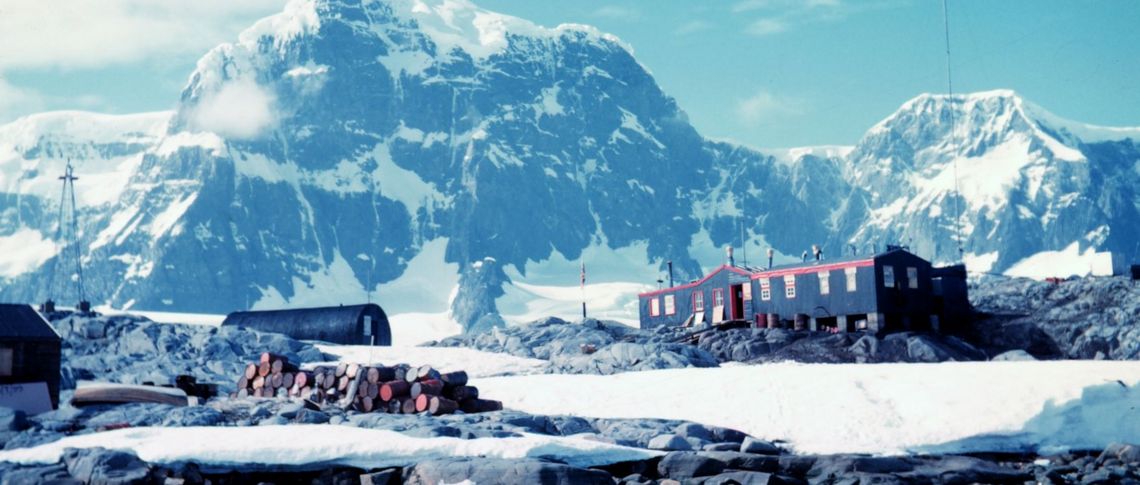
In 1978, Argentina transferred a pregnant woman to Esperanza Base, where the first person in the continent’s history was born. Chile responded in 1984 with births of its own at Villa Las Estrellas, where a school and a civil registry office now operate. The United Kingdom issues postage stamps from the post office at Port Lockroy. Yet births, classrooms and stamps do not hand over the keys to the white mantle beneath which lie Antarctica’s wildlife, southern marine vegetation and mineral wealth.
It is not that the claimants fail to protect or study the continent. The United Kingdom has just completed its largest investment in polar science infrastructure since the 1980s. Chile has turned Punta Arenas into a gateway to the continent. Argentina has maintained Antarctica’s oldest continuously operating station at Orcadas since 1904, although its scientific programme is currently facing its worst budget crisis in decades. Science exists, but it orbits around territorial claims because it has been turned into political currency, securing one’s seat at the table.
Truths and misconceptions
The actors competing over the continent continue to accumulate symbols of ownership while the clock on the 1959 Antarctic Treaty and the 1991 Madrid Protocol ticks towards 2048 (the Protocol’s 50-year-mark after which review becomes possible). Yet that race is still conceived through an outdated paradigm, built on assumptions that no longer carry much weight or legitimacy in today’s world.
The 1959 Antarctic Treaty was a Cold War pact for peace and science, not a regime of ownership or stewardship. It established the continent’s exclusively peaceful use, freedom of scientific research and cooperation, the prohibition of nuclear activities and mutual inspections. It mentions resources only in reference to ‘living resources’, and solely for their protection. Its preamble declares peaceful use ‘in the interest of all mankind’: humanity as the beneficiary of peace, never the owner of the territory; a continent intended for everyone. Article IX gives treaty parties a voice only if they demonstrate 'substantial scientific research activity'; those who do not invest do not get a vote. Finally, Article IV did not resolve sovereignty claims — it froze them in place. No one may enlarge, recognise or renounce them. Nor did the Treaty establish sanctions.
Beneath the ice of the Antarctic Peninsula lies what is believed to be a wealth of resources, from copper and nickel to rare earth elements.
A second truth is that the prohibition on exploitation and extraction does exist, but it lives in another document, and it does not expire. In 1991, the Madrid Protocol declared Antarctica ‘a natural reserve, devoted to peace and science’ and provided that ‘any activity relating to mineral resources, other than scientific research, shall be prohibited.’ Some argue that this prohibition expires in 2048, but that is incorrect. Article 25 merely establishes that, after 50 years in force, any Consultative Party may request a review conference under extremely stringent conditions. Any amendment would still require approval by three-quarters of the Parties, including all Consultative Parties from 1991. Moreover, other articles, such as Article 7, cannot be amended at all unless a legally binding minerals regime is in place.
That is why it is inaccurate to speak of an expiration date. What lies ahead is a tightly barred window. The real danger lies in the fine print: if an approved amendment fails to enter into force within three years, any Party may withdraw from the Protocol. The threat posed by 2048 is not that extractivism will suddenly become legal, but that someone may exploit a legal escape route and turn that window into an exit door from the agreement itself.
The third truth is the most uncomfortable — and the least acknowledged. The system is already failing to deliver on its promises. The liability regime for environmental damage envisaged in Article 16 of the Protocol was adopted as Annex VI in 2005, introducing compulsory insurance and financial liability for operators. Yet more than two decades later, it has still not entered into force. Of the Protocol’s six annexes, the only one that places a price on environmental damage is also the only one that remains inoperative.
That is the legal state of affairs. The urgency, however, is material. Beneath the ice of the Antarctic Peninsula lies what is believed to be a wealth of resources, from copper and nickel to rare earth elements. Meanwhile, China continues to expand its network of bases while invoking the ‘rational use’ of resources permitted under the Convention governing the Southern Ocean — a formula increasingly interpreted as a right to exploit resources, and one that sounds ever more like the rhetorical groundwork for extraction. Krill, the foundation of the Southern Ocean’s web of life, has already become the target of industrial fishing, which the Antarctic system’s own rules have failed to contain. Record catches during the most recent season forced an early closure of the fishery for the first time in history.
Consensus worked as long as no one truly tested it over scarce resources. Faced with today’s pressures, the claimant states instinctively revert to the language of the 20th century to defend ‘what is mine’. But that is the wrong – and incomplete – question, framed in terms of titles that international law has left unresolved for 60 years.
From claims to care
There is another question that can be asked, one rooted in this century: not who owns Antarctica, but who can care for it. How can we move from the ‘for everyone’ granted by the Treaty to the ‘belonging to everyone’ that the planet now requires?
The sovereignty paradigm has already evolved in other strategic spaces. The law of the sea declared the deep seabed the ‘common heritage of mankind’ and established an authority in which every state has a seat. It is an imperfect model under pressure, but one that introduced the two ideas missing from the Antarctic system: shared ownership and universal representation.
A collective sovereignty of stewardship for Antarctica, with permeable frontiers, would offer a similar path forward. Belonging to everyone does not mean dividing the continent among the world’s 193 states, nor evicting those who have maintained a presence there for more than a century. It means institutionalising a system of co-governance inspired by the spirit of an Antarctic community, in which those with the capacity and long-term presence act on behalf of everyone, guided by agreements that put stewardship first. This is not a utopian vision. It means building institutional cooperation instead of symbolic competition, investing in genuine capability – through funding, science and permanent presence – and agreeing on rules that prevent the wealthiest countries from exercising arbitrary vetoes in 2048 while ensuring that states with fewer resources are not excluded from the table. The historic claimants could stop shouting ‘this is mine’ like children quarrelling over a toy and instead become the continent’s first collective guardians, transforming frozen ownership claims into responsibilities.
Twenty years remain — the time it takes to raise a generation. Those who will sit at the negotiating table in 2048 are in primary school today, looking at maps shaped by the aspirations of their homelands. We can teach them to defend a triangle. Or we can teach them what the legal texts actually reveal. Antarctica has no officially recognised owner, and for that very reason it belongs to everyone: to those who make claims and to those who were never invited to the table because they were not even independent states in 1959. Above all, it belongs to the living beings that depend on its ice and its food webs, to those of us who inhabit this planet today and to those who will come after us. Thinking about 21st-century geopolitics without sustainability is as dangerous as thinking about geopolitics in 1959 while ignoring the nuclear threat of the Cold War.
Making politics in the present means creating the future. It requires replacing the question of who owns the world’s last ownerless territory with the only question that truly matters: who will be responsible for it, and how.
A longer version of this article was first published on Latinoamérica21.