


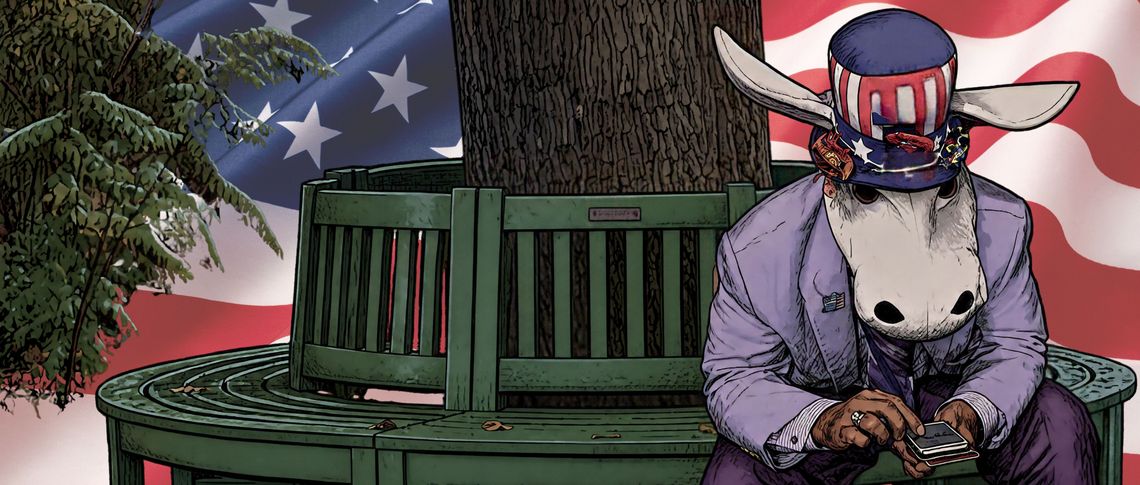
The Democrats are convinced they can beat Donald Trump. We might have been here before, but two years on, their chances are better than ever — even if doubts still remain. With only five days to go before the US midterms, there are striking similarities with the final leg of 2024’s presidential campaign. Back then, though, the race was about just one person; this time, all 435 seats in the House of Representatives and 35 of the 100 seats in the Senate are up for grabs.
In 2024, the Democratic Party did more to convince itself than actual voters that it would win. President Joe Biden’s withdrawal from the race just three months before polling day was one of many reasons why voters lacked confidence in the party. Today, observers are warning against being overly optimistic and any talk of a blue wave. The reason is Trump. His extraordinary self-confidence and proven ability to make a comeback remain all too fresh in Democrats’ minds. As Trump put it himself: ‘Bottom line, it’s gonna all work out. You know why? It always does.’ This level of confidence is all part of the strategy, of course.
With such low approval ratings, it may look like an uphill struggle for Trump. But this is the man who pulled off a seemingly impossible victory two years ago.
But why are the Democrats so nervous? They are doing much better in the polls than they were in 2024, while Trump is performing considerably worse. His disapproval rating is higher than his approval rating, or in US political speak, he is ‘underwater’. So deep underwater that his approval rating is just a third. Still, he is heavily involved in the campaign and fighting hard for his party, keeping up with a tough schedule of appearances. He acquired an aircraft from Qatar, had it refitted and repainted, and it is now in frequent use as Air Force One, with civilian air traffic banned throughout the entire airspace around each airport whenever it lands. Trump is visiting Alaska, Kansas, Iowa and South Carolina — states that, in theory, should remain safely in Republican hands. With such low approval ratings, it may look like an uphill struggle for Trump. But this is the man who pulled off a seemingly impossible victory two years ago.
The Democrats should have every reason to feel confident. A majority in the House of Representatives seems within reach, and they have a strong chance of taking control of the Senate. The polls point to a consistent trend: renowned political forecaster Nate Silver puts the odds of a Democrat victory at 75 per cent in the Senate and an even more substantial 93.6 per cent in the House.
And it’s little wonder: there are plenty of reasons for voters to be unhappy with the government, but one thing stands out above anything else — the rising cost of living. Persistent inflation, high food prices, rising fuel costs, steep mortgage rates and exorbitant healthcare costs are all taking their toll on people. Between February and October alone, anger over rising prices (particularly over fuel) increased sharply. The percentage of people reporting they could barely afford to fill their tank rose from 28 per cent to 71 per cent. And all of this is happening against a backdrop of mounting national debt.
Three challenges
Towering above these concerns is the war with Iran, which has prompted widespread discontent, and not only for Republicans but especially among independent voters. Trump’s opposition to foreign military intervention was a key factor in winning the presidency. At his inauguration, he said his success should be measured by ‘the wars we never get into’. Added to this is growing criticism of the brutal crackdown on immigrants, particularly those from minority communities such as Latinos, whose votes the Republican Party can no longer count on to the same extent.
But the Republicans doing badly does not automatically mean the Democrats will do well. Despite riding high in the polls, the Dems face three challenges that could spoil election night for them and leave them with a worse result than they had hoped for.
Firstly, the primaries have exposed just how deeply divided the party remains. Two rival factions, each striving to defeat the Republicans, are pursuing markedly different strategies. On one side are the leftist insurgents on the progressive wing of the party, some of whom want to break with the existing political system because they no longer believe it can be reformed. Their goals are to improve social justice, reduce corruption and restore political credibility. They also want to redefine the working class, encouraged by New York mayor Zohran Mamdani, not simply as an industrial workforce, but as people struggling to pay their bills and make ends meet, with little time or disposable income left over. The insurgents – undoubtedly guided by their mentor, Vermont senator Bernie Sanders – include Senate candidates Abdul El-Sayed in Michigan and Charles Booker in Kentucky, as well as House candidates Claire Valdez in New York and Melat Kiros in Colorado.
Winning the midterms would not necessarily put a Democrat in the White House in 2029.
On the other side are centre-left reformers, who believe the system can still be fixed. They seek to strike a better balance between business and politics, so that wealth can be distributed more fairly. Their leading figures include Senate candidates Jon Ossoff in conservative-leaning Georgia, James Talarico running in Texas and Peggy Flanagan in Minnesota, as well as House candidate Rebecca Cooke in Wisconsin. The former two Senate candidates, in particular, are seen as having considerable potential, should they win in the midterms.
Secondly, the Democrats have yet to convincingly answer any of the questions that Trump’s two terms in office have brought up: what kind of economy does the US need if it is to remain a global superpower? What role does it want to play on the global stage in the years to come? Who belongs to America, and who does America belong to? And how can the party restore the faith lost in institutions, democracy and, above all, the American Dream?
Twenty-five years ago, 60 per cent of Americans trusted their government. Today, that figure is just 17 per cent. The Republicans’ declining popularity has not translated into support for the Democrats. Both parties are roughly neck and neck, with favourability ratings hovering around 50 per cent, which explains why independents are throwing their hat in the ring. Voters want some fresh blood and are prepared to take a chance on candidates with little political experience.
The third challenge is a toxic combination of virtually unlimited funding and the ubiquitous use of AI in election campaigns. The sums involved are obscene, running into the billions of dollars. The Republicans’ war chest is bulging, with billionaire Elon Musk alone putting up $366 million to help them win, particularly in Texas, where he lives. Closely linked to this is the growing tide of AI-powered disinformation, both in words and images, spreading largely unchecked across social media. There are few limits to the ability to depict events that never happened, while real events are denied or stricken from the record. The storming of the Capitol by Trump fanatics in January 2021 is a case in point: despite having actually taken place, it is still denied by some within the MAGA movement and beyond.
One thing is clear: a Democrat victory alone would not trigger a decisive shift in the country’s political direction. Winning the midterms would not necessarily put a Democrat in the White House in 2029. Nor would it rule out another Republican administration — whether in terms of policy or the individuals who might ultimately lead the country.
Sooner or later, though, the Republicans will lose Trump: their most formidable campaigner and a man capable of dominating headlines and shaping the political debate however he likes. But the Democrats shouldn’t take victory as a given. They need to pull together the different strategies that have worked for their candidates and forge a common path towards the 2028 presidential election. That way, everything is ‘gonna all work out’ — just not in the way that Trump wants.


