


Far from marking a transition toward peace, the current direct negotiations between Lebanon and Israel reflect a more troubling dynamic: the consolidation of power asymmetries under the cover of diplomacy. While negotiations presuppose reciprocity and constraint, these conditions are largely absent. The talks unfold within an environment structured by imbalance. Diplomacy operates less as a mechanism for resolution than as an extension of coercion, exercised through political means.
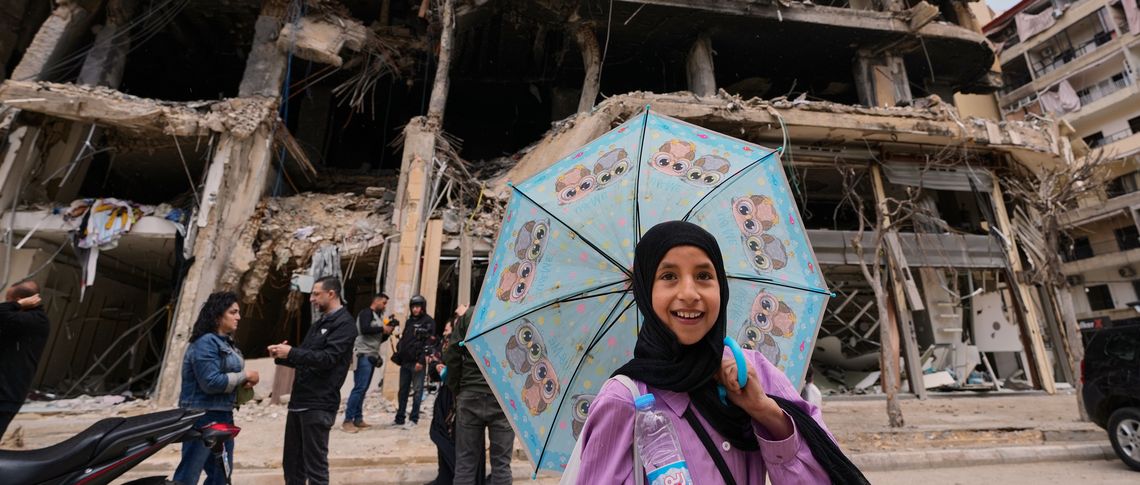
Diplomacy presupposes a degree of autonomy of the negotiating parties. Since March 2026, however, Israeli military operations have intensified across Lebanon, with sustained strikes and territorial incursions. Under such conditions, diplomacy is shaped by coercion. The question is no longer what Lebanon can negotiate, but whether it can exercise meaningful agency under sustained pressure. While this pressure is applied through sustained Israeli military operations on the ground, it is not limited to the military domain. It is layered across diplomatic and economic registers, US-driven negotiation frameworks that shape the terms and sequencing of engagement, and Lebanon’s ongoing economic dependency, which further constrains its ability to negotiate from a position of autonomy.
The collapse of the 2024 ceasefire should be understood in this light. It imposed obligations without enforcement, guarantees or a credible neutral guarantor. The Lebanese Armed Forces (LAF), in line with an August 2025 governmental decision, began deploying south of the Litani River and initiating steps toward the disarmament of Hezbollah. This was acknowledged by the UNIFIL peacekeeping mission. Still, these measures were not met with a corresponding Israeli withdrawal or de-escalation. Israeli forces retained operational freedom even after the ceasefire, while Lebanon was expected to implement commitments under conditions it did not control. The result was predictable: a ceasefire that normalised violations rather than preventing them. The current negotiations inherit this architecture.
Diplomacy as a smokescreen
Negotiations derive their meaning from the internal political backing that sustains them. The May 1983 Agreement, signed under Israeli occupation, collapsed not because diplomacy failed, but because it lacked internal legitimacy in Lebanon and was widely perceived as imposed. What distinguishes the current phase is not the return to negotiations, but the conditions under which they are taking place: under fire and at a moment when the Lebanese state is at its weakest.
At the domestic level in Lebanon, the negotiations face another structural constraint: the absence of consensus. Opposition to the current track is not confined to Hezbollah or its support base. It extends across political and sectarian lines. For many, negotiations conducted under fire are not an exercise of sovereignty but its suspension. This position is reflected in the stances of key political actors such as the Progressive Socialist Party, the Free Patriotic Movement and the LNA Party. They have all emphasised that any negotiation track must be preceded by a sustained ceasefire, Israeli withdrawal from Lebanese territory, the reconstruction of affected areas and the safe return of displaced populations. The current negotiations are widely read not as diplomacy, but as surrender. But in a fragmented country such as Lebanon, no agreement can be sustained if it is not politically and socially owned. Lebanon’s history is clear on this point: arrangements that do not have internal legitimacy do not stabilise the country; ultimately, they unravel.
The structural imbalance between Lebanon and Israel is further reinforced by the nature of the mediation process.
Yet the deeper issue is not external pressure or internal division, but the absence of a coherent Lebanese diplomatic and defence strategy for meaningful negotiations. Negotiations are instruments through which sovereignty is exercised and leverage is deployed, but their effectiveness depends on the state’s ability to define priorities, sequence concessions, and coordinate political and military decision-making. In the Lebanese case, this capacity remains largely absent. Executive authority is fragmented, and there is no unified foreign policy apparatus. As a result, negotiations risk becoming reactive rather than strategic. Diplomacy no longer functions as a tool of statecraft but as a reflection of the constraints imposed upon it.
Lebanon’s limited negotiating capacity reflects the erosion of its institutional base, from weakened public services to the diminished role of the state as the primary organiser of political and social life.
The current negotiations have been openly framed by Israeli leadership as a tool for exercising power. Prime Minister Benjamin Netanyahu stated in April 2026 that Israel is entering talks from a position of strength. He noted that ‘these negotiations have not taken place for over 40 years. They are happening now because we are very strong, and countries are coming to us — not only Lebanon.’ This reflects a conception of diplomacy as the consolidation of military advantage. What emerges is not compromise, but hierarchy, a form of structured domination.
The structural imbalance between Lebanon and Israel is further reinforced by the nature of the mediation process. Washington is not a neutral broker, nor is it perceived as one in Lebanon. Its alignment with Israeli strategic priorities limits its capacity to act as a guarantor of balance. In practice, this positions the United States as an agenda-setter that defines the parameters of negotiation in line with its own broader regional strategy. This is not simply a matter of perception; it has material consequences. Mediation without credibility produces agreements without legitimacy, and agreements without legitimacy rarely hold.
This, in turn, raises the question of alternative mediation frameworks. European actors are better positioned to contribute to a more balanced process within UN frameworks. Given its prior role in facilitating indirect negotiations between Lebanon and Israel, this is particularly the case for Germany.
Greater risks
The negotiations must also be situated within a wider regional war. Lebanon has become a secondary front that is shaped by the dynamics of the U.–Israel–Iran confrontation. Hezbollah’s entry into the escalation following strikes on Iran has further involved Lebanon in this broader conflict. Developments on its territory are linked to regional calculations that are beyond Lebanese state control. As a result, the terms of negotiation are not determined solely at the national level, but are conditioned by a wider deterrence structure in which escalation and de-escalation are negotiated across multiple arenas.
This is why the current negotiations risk more than failure. They risk institutionalising weakness. Agreements reached under these conditions are unlikely to correct asymmetry; they are more likely to entrench it. What is being negotiated is not an end to hostilities, but the terms under which asymmetry is formalised and sustained.
A different outcome would require fundamentally different conditions. A sustained and verifiable ceasefire is not a technical detail; it is a political prerequisite. Equally critical is the question of mediation. Without a more balanced or multilateral framework, the process will continue to lack credibility.
For European actors, particularly within the European Union, this raises a strategic question. Continued reliance on US-led mediation is not a neutral choice; it reinforces existing asymmetries. A more active European role, grounded in international law and institutional support, could help rebalance the negotiation framework.
At present, those conditions are absent. What is unfolding is not a transition from war to peace, but a shift in how power is exercised. If negotiations proceed without addressing the asymmetries that structure them, the result will not be a resolution of the conflict. It will be the normalisation of coercion: an agreement that reflects not mutual consent, but unequal power.


