Consider our political systems not merely as battlegrounds of passions, ideologies and economic interests, but as systematically functioning arrangements of interactions, akin to game theory. In recent decades, we have witnessed the dissolution of large homogeneous groups into numerous subgroups — a patchwork of minorities. This fragmentation, compounded by individualisation and the resulting weakening of strong political bonds, has profound consequences for democratic governance.
In nations with majority voting systems, this process fragments the party system itself. As dissatisfaction with political parties grows – initially quietly but eventually becoming pronounced – new parties emerge, further splintering the political landscape. This increasing fragmentation complicates government formation and makes majorities more precarious. Often, only coalitions that can agree on the lowest common denominator are formed. Consequently, the outcomes of politics do not necessarily improve; in most cases, they worsen.
A vicious circle
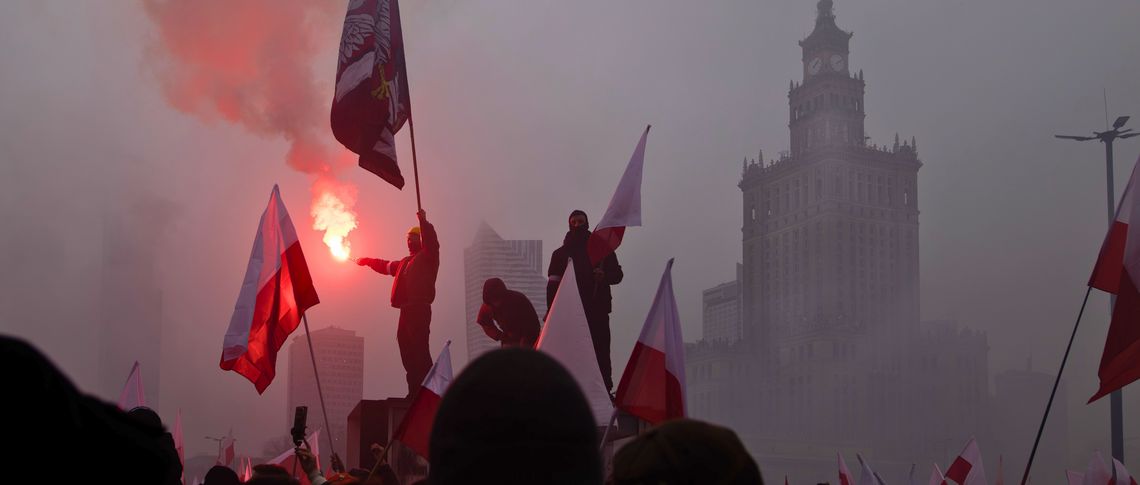
Decisive action, bold moves and clear leadership have become increasingly elusive. This reinforces dissatisfaction and the prevailing sentiment among voters that politicians are failing to achieve meaningful results. Doubts about the effectiveness of the political system become self-perpetuating, creating a situation where decisive politics is nearly impossible. The rise of populists and right-wing extremists is both a consequence of this stagnation and a further catalyst — a ratchet effect. Right-wing agitators stoke discontent, transforming it into anger and outrage while exploiting negative emotions.
As they gain strength, democratic politics becomes more paralysed, often preoccupied with defending against radicalism, preventing the worst outcomes, and forming coalitions whose members can agree on little more than a lacklustre commitment to ‘more of the same’. When social cohesion erodes, the radical right gains ground — which then leads to even more division. The perceived polarisation and alienation that accompanies the rise of right-wing extremism increases the perception of social disintegration and decay.
Democracy gives rise to its own threats.
In a sense, right-wing radicalism is itself the problem that it then laments in a subsequent cycle. It is the disintegration that it denounces. In this way, it contributes to the chain of evidence that reinforces authoritarian reflexes. Authoritarianism feeds authoritarianism.
These framework conditions of political systems – fragmentation and the resulting weakness of action – lead German democracy theorist Veith Selk to diagnose that modernisation and social change are increasingly putting democracy under stress, making a reversal unlikely. This presents a rather depressing diagnosis of decline: democracy gives rise to its own threats.
Additionally, globalisation necessitates ‘global governance’, which, even under favourable circumstances, has historically produced solutions at an unbearably slow pace and is now reaching its limits amid chaotic multilateralism. Conversely, ‘de-globalisation’ – through national power politics, tariffs and trade wars – provides no relief and instead creates new problems, such as the loss of sales markets, disrupted supply chains and a consequent decline in economic growth, potentially destroying whole economic sectors.
Europe’s mounting crises
The emergencies of the future are already on the horizon. The climate catastrophe threatens not only our livelihoods but also has tangible economic repercussions. Crop failures due to droughts and floods are already contributing to rising inflation in the cost of living, particularly for vegetables and fruit. This situation is certain to become much more severe. Even if successful, socio-economic transformation will be costly. Insurance companies may face financial difficulties, asset portfolios could lose value rapidly, and if we are unfortunate, a sudden ‘Minsky moment’ could trigger a downward spiral leading to a financial crisis.
Ageing populations are already straining public finances, with healthcare and care systems becoming increasingly expensive, pushing European welfare states to their financial limits. Government debt is rising, and under current conditions, it will be more challenging to “grow out” of debt than it was in the past. Growth will be harder to mobilise, and austerity is not a viable alternative, as contraction strategies lead to dire consequences. These are all concerning prospects.
Here are a few highlights: Germany’s economy has stagnated for six years, and private investment remains weak. France is facing a budget deficit of 5.8 per cent and a public debt ratio of 113 per cent of GDP, while sliding from one government crisis to another. Political actors are unable to achieve a socially just change of course that would reconcile savings in the pension system with additional revenue from wealth taxes.
Austria was projected to have a budget deficit of six per cent, prompting left-wing Keynesian Finance Minister Markus Marterbauer to assemble a package of tightening measures aimed at reducing the deficit to 4.5 per cent by 2025. Ensuring that large fortunes contribute to costs through higher taxation is not only a matter of fairness but also an economic necessity — yet there is a lack of parliamentary majorities for decisive measures nearly everywhere.
There is a growing desire for politics to provide sensible solutions instead of getting bogged down in petty details.
A whole panorama of emergencies is unfolding before us. As noted earlier, most of those in power have little energy or flexibility to think and act beyond daily problems. This situation has tangible and psychopolitical effects: citizens feel that things are deteriorating and that serious trouble is brewing, while simultaneously sensing that those in power are merely tinkering with details. For many, this leads to outright fear and a generally pessimistic mood, which in turn fuels the rise of right-wing radicals.
The political forces of the left and the conservative centre must, above all, demonstrate their ability to act together. A few years ago, the prevailing view was that various political camps should dare to engage in more conflict to make democratic life more vibrant. At that time, there were complaints about everyone crowding into the centre and becoming interchangeable. However, we find ourselves in a different situation today.
There is a growing desire for politics to provide sensible solutions instead of getting bogged down in petty details or wasting time on pointless culture wars. The left may need to acknowledge that states are reaching their financial limits, while conservatives must recognise that clientele politics, which ensures free rides for the super-wealthy, is no longer viable. Urgent issues require swift action, and all of this comes at a high cost.
Rhetoric is no longer effective, and pandering to the extreme right leads nowhere. Conservatives, in particular, need to understand this, as they sometimes give the impression that they view fascists as merely slightly more radical conservatives (or conservatives as moderate fascists). This perception is not only misguided; it also highlights a significant identity crisis within traditional conservatism. Fortunately, some are beginning to realise that authoritarianism is not a relative; it is the enemy. The best way to undermine it is to demonstrate a commitment to action.
This is a joint publication by Social Europe and IPS Journal.