


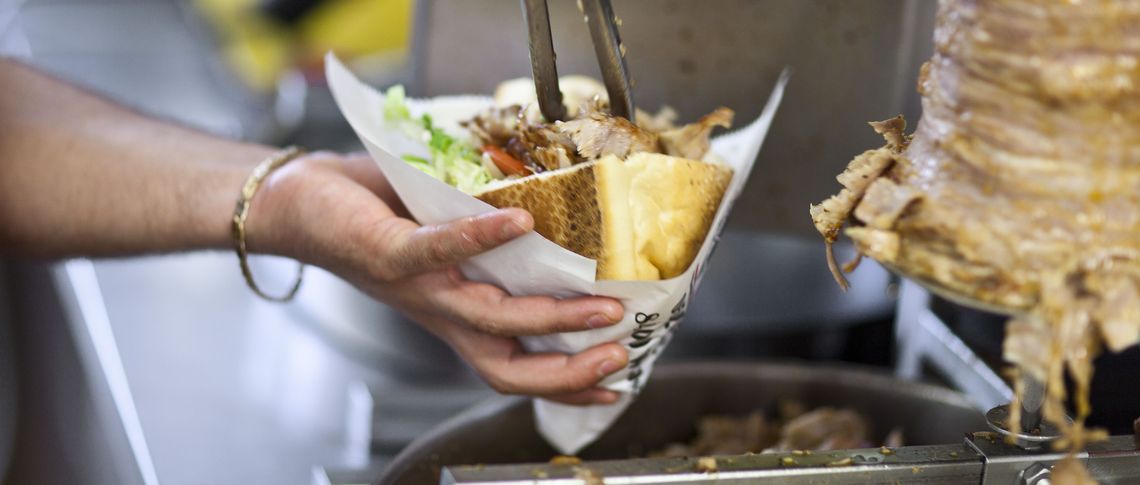
In the summer of 2025, a quiet industrial town in Baden-Württemberg, Germany, became the unlikely epicentre of a workers’ struggle that shook one of the country’s most beloved icons: the döner kebab. What began as a local labour dispute at a meat processing plant turned into a national conversation about labour rights, migrant work and the real cost of fast food.
In July 2025, 120 workers at the Birtat meat-processing factory in the town of Murr walked off the job. Their demands were simple but urgent: a pay raise, formal job classifications and a collective bargaining agreement (CBA).
After weeks of public attention and industrial pressure, a historic agreement was reached.
These workers, many of them migrants from Türkiye, Romania, and Bulgaria, were working in cold, physically demanding environments with inconsistent and often low wages. Led by the NGG (Germany’s Food, Beverages and Catering Union), they launched warning strikes that soon escalated into a broader movement, affecting the national döner supply chain and triggering fears of a shortage.
Only three of the workers were German — and they too joined the strike. Decisions on the picket line were made collectively. At one vote, a toddler named Azad dropped his father’s ballot into the box.
After weeks of public attention and industrial pressure, a historic agreement was reached: a starting gross salary of €2 600, phased raises up to 17 per cent, and the industry’s first sector-wide collective agreement, effective through December 2026.
A cultural icon
For many outside of Germany, the döner kebab might be, to put simply, tasty street food. Inside Germany, it’s a cultural icon. Originating in Berlin in the 1970s, when guest workers (Gastarbeiter) adapted traditional grilled meat into a handheld sandwich, the döner quickly became a national favourite. Today, Germans consume roughly 2 million döner kebabs daily — that’s about 660 tons of meat every single day.
But döner isn’t just popular. It’s big business. The German döner industry generates an estimated €2.4 billion annually and employs around 60 000 people across Europe, mostly in small family-run or immigrant-owned operations. Much of the labour happens on-site in the shops: marinating, slicing, grilling. That makes the sector highly labour-intensive compared to fast food giants like McDonald’s.
By 2024, döner prices had climbed from around €5 to nearly €7, sparking what the press called ‘Dönerflation’.As public frustration grew, some even demanded a Döner-Preisbremse — a döner price cap.
Chancellor Olaf Scholz responded on TikTok, dismissing the idea as unrealistic. But the moment turned döner into a meme, a symbol of inflation, and unexpectedly, a political talking point. Later, during a visit to İstanbul, Scholz brought döner kebabs as a diplomatic gesture.
The romantic image of the neighbourhood döner shop hides a harsh reality behind the scenes. Meat processing workers in the supply chain often work in near-freezing temperatures for long hours with minimal labour protections. Unlike standardised fast food chains, the döner industry has historically lacked sector-wide agreements, job classifications or centralised bargaining.
In 1973, hundreds of guest workers at the Ford plant in Cologne staged a wildcat strike protesting dismissals and discrimination.
This structural informality creates a ‘gray zone’ where wage exploitation and unsafe conditions can flourish. The Birtat strike pulled back the curtain on this invisible workforce and put their demands for decent pay and recognition on the national agenda.
The Döner Kebab strike didn’t come out of nowhere. It follows a long history of migrant labour struggles in Germany. In 1973, hundreds of guest workers at the Ford plant in Cologne staged a wildcat strike protesting dismissals and discrimination. Though ultimately suppressed, the action left a legacy of migrant resistance that persists today.
The Birtat workers, from various Eastern European and Middle Eastern backgrounds, stood on the shoulders of those earlier movements. Their strike reminded Germany that its so-called ‘integration success stories’, like the döner kebab, rest on the often invisible labour of racialised, migrant workers.
While McDonald’s and other chain restaurants in Germany now operate under collective agreements covering about 120 000 workers, with minimum hourly wages nearing €15 by 2026, the döner industry has lagged far behind. The centralised chain structures make sector-wide bargaining more feasible. In contrast, the döner sector, dominated by fragmented small businesses, lacks such coordination.
The new agreement could be the first step toward reversing that. If sector-wide classification and wage structures emerge, it could lead to the regularisation of labour across thousands of shops and suppliers. The NGG union called the deal a ‘sectoral milestone.’
In both Europe and North America, the food industry sits at the intersection of precarious labour and corporate profit.
Germany’s fast food labour struggle echoes trends across the globe. In the United States, workers at Starbucks and food processors like Nabisco and Kellogg’s have staged high-profile strikes over low wages, unsafe conditions and tiered pay systems. In both Europe and North America, the food industry sits at the intersection of precarious labour and corporate profit.
These struggles often share three traits: low pay, fragmented organisation, and an overrepresentation of women, migrants and racialised workers. The Döner Kebab strike highlights how even in Europe’s largest economy, essential workers in popular sectors can remain invisible — until they organise.
What comes next matters. The agreement at Birtat includes commitments to define job classifications and wage structures, which could ripple outward. The döner industry’s cultural popularity makes it a powerful stage for conversations about labour justice, fair wages and the politics of everyday consumption.
The sandwich that once symbolised multicultural Berlin now stands for something more: the fight for dignity at work and the power of collective action. It carries the hope that fast food doesn’t have to mean fast exploitation. Behind every döner stand is a worker — and now, a movement.


