The arrest of Nicolás Maduro and the tightening of pressure across the Global South reflect a deeper change in global governance. These actions suggest that sovereignty is no longer protected mainly by law and multilateral rules, but shaped by US domestic politics and security narratives. For countries in the Global South, the issue is not support for Caracas, but the precedent that the arrest has set. If a sitting head of state can be detained under broad legal arguments, and if whole regions can face travel bans imposed by a single country, then the rules themselves become conditional. Compliance offers only temporary relief, not real protection. This is why many states are now looking for alternatives to Western-led systems.
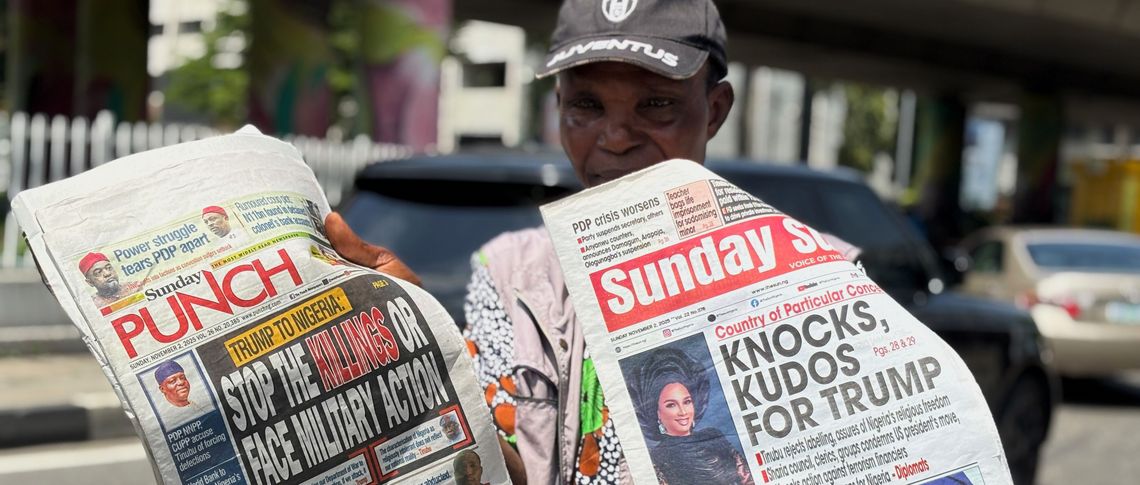
For Africa, this is nothing new. Even before Caracas, the pattern was visible. In northern Nigeria, recent US airstrikes were presented in Washington as a moral intervention to stop religious violence. But Nigeria’s crisis is far more complex. It involves insurgency, criminal networks, climate pressure and regional instability, and civilians of all faiths suffer the consequences. By turning this into a simple rescue story, the US acted without multilateral approval or an African mandate. The deeper issue was not the strike itself, but the precedent it reinforced: that African crises can be defined and acted upon from outside, with legitimacy claimed afterwards. This raises a serious question for African states: are they partners in managing their own security or the experimental playground for the US president?
An opportunity for Europe
This question fits into a wider shift in how power is used. Over the past year, Washington has imposed travel bans, visa limits and diplomatic penalties on more African countries. These are rarely called sanctions. They are presented as technical responses to disagreements over security, migration or geopolitics. But the message is clear. Access, mobility and diplomacy are becoming tools of pressure. The result is not just inconvenience, but a change in how sovereignty works. Cooperation is no longer negotiated — it is enforced through selective exclusion. Multilateral processes are pushed aside.
Some African governments have responded openly. Mali, Burkina Faso and Niger rejected US measures directly. Their position is simple: partnerships cannot depend on submission to foreign political priorities. They have described travel bans and diplomatic penalties as tools of coercion, not legitimate policy. Their response has gone beyond protest. By leaving Western-led security frameworks and seeking new partnerships, they are making one point clear: sovereignty is not for sale, and legitimacy cannot be outsourced.
This growing unease raises a deeper question: who gets to define Africa’s crises? The concern is no longer only about intervention, but about who has the power to label and frame a crisis before any response begins.
Other countries have reacted more quietly. Nigeria, South Africa, Ethiopia and others have avoided open confrontation and chosen careful engagement instead. But even there, something is changing. Among policymakers, diplomats and civil society, US actions are increasingly seen not as isolated security steps, but as signs of how fragile sovereignty has become in a transactional world order. Even where cooperation continues, the language of partnership is being replaced by a more cautious and sceptical view of power and dependence. Silence should not be confused with agreement.
This growing unease raises a deeper question: who gets to define Africa’s crises? The concern is no longer only about intervention, but about who has the power to label and frame a crisis before any response begins. The US portrayal of Nigeria’s conflict as a religious rescue mission has exacerbated this fear. By imposing a simple story on a complex reality, Washington did not just act as a security player, but as the author of the crisis itself. For many Africans, this confirms a long-standing worry: that external powers still claim the right to decide what Africa’s problems are and how they should be solved.
Europe now sits at the centre of this shift. For years, the EU has spoken about strategic autonomy, equal partnership with Africa, and support for multilateralism and international law. But real crises test these claims. The events in Caracas and Sokoto called for clarity, yet Brussels responded cautiously. In a world moving from rules to raw power, hesitation is not neutral. It sends a signal. And for African partners, Europe’s silence risks being seen as alignment rather than diplomacy.
Though Greenland is not Africa, the logic is strikingly familiar — territory and sovereignty are being discussed as assets to be managed rather than rights to be respected.
The implications of this shift are no longer confined to the Global South. The renewed debate in Washington over Greenland, framed in strategic and security terms without meaningful consultation with European partners, has unsettled capitals across Europe. Though Greenland is not Africa, the logic is strikingly familiar — territory and sovereignty are being discussed as assets to be managed rather than rights to be respected. The emerging American doctrine is not selective; it is expansive. If a self-governing territory within Europe’s geopolitical orbit can be subjected to this transactional pressure, then African states are right to see Caracas and Sokoto not as anomalies, but as early warning signs of a broader erosion of sovereignty.
If Europe wants to preserve its partnership with Africa, it must do more than offer careful criticism of US actions. It must act in ways that respect African agency and support sovereign decision-making. This means backing African-led security systems, not imposing outside solutions, and investing in financial and digital infrastructure that African states control. Partnership should strengthen Africa’s ability to manage its own crises and should treat African countries as equal partners in shaping global rules, not just as states expected to comply.
Caracas and Sokoto are not turning points, but they have reinforced a growing conviction among African states that dependence on US-led systems offers diminishing returns. Europe now faces a choice: work with Africa to build a rules-based order that respects local agency, or slowly lose its influence. The outcome will depend on how Europe and the wider world respond to Africa’s new stance.