Europe will be unable to navigate the new world if it refuses to face reality. Which today is crude, uncomfortable and complex. Often brutal. Confronting this reality is not a matter of temperament but the precondition for effective foreign policy. Because, strategy begins where denial ends.
We have entered into a new imperial age in which Europe is being squeezed from both the East and the West. Our sovereignty, interests, security and democracy are under simultaneous pressure. The European project was built to prevent the return of power politics to our continent. And yet, these power politics have found their way back, and not in a mild way.
To the East, Russia acts as a revisionist imperial force. Leaving Ukraine to not only defend itself but the core principles on which European security rests. The threat that Russia poses is direct, constant and existential. Still, the resulting shift to the West is no less consequential. The United States, Europe’s closest ally since 1945, is no longer behaving as one. It has questioned long standing security guarantees and signalled its willingness to coerce Europe economically and politically. It has even pursued control over Greenland, a European territory, without ruling out the use of force. And it has also been explicit in its intent to reshape Europe’s internal politics by empowering radical right actors who act as its political proxies.
The temptation to divide global politics into ‘the West versus the rest’ is not just outdated. It is inaccurate, simplistic and dangerous.
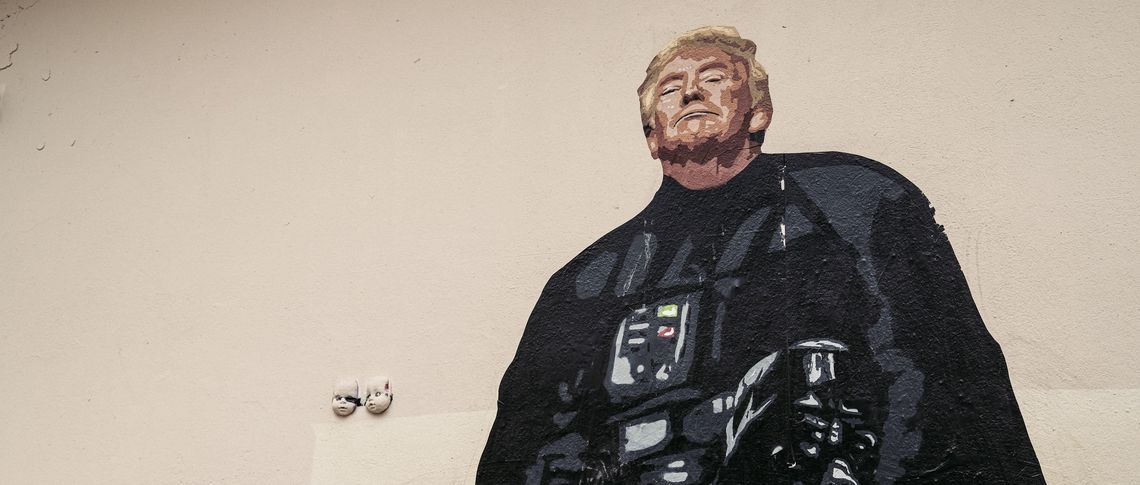
President Trump has been clear about his objectives. He wants a weaker and more divided EU because he despises what it represents: multilateralism, a rules-based order and the European social model. He will use tariffs, economic coercion and disinformation to pursue those objectives. And Europe cannot respond effectively if it insists on pretending that this reality does not exist.
Diplomacy must, of course, remain diplomatic. But diplomacy detached from reality becomes ineffective. Uncomfortable facts will not disappear if we act as if they do not exist. This is when strategy turns into theatre. Europe should seek the best possible transatlantic relationship, while remaining mindful of our structural dependencies, which must be mitigated. Trump has made very clear what kind of relationship he wants: not one based on partnership, but on submission. To address this, Europe needs unity, strategic intelligence and firmness. Here, the language of power is not optional. It is the only language likely to be understood.
It is precisely in this context, with transatlantic ties under unprecedented strain, that Europe must avoid a dangerous reflex. And must not frame today’s world through Cold War categories. The temptation to divide global politics into ‘the West versus the rest’ is not just outdated. It is inaccurate, simplistic and dangerous. The reasons to avoid this are clear and plentiful.
The first being that this framing can only be strategically disastrous for Europe, since it would result in a narrowing of Europe’s choices, weakening its diplomacy and pushing it towards isolation at the very moment when it must broaden its partnerships. Secondly, Europe does not, and should not, view the world as bipolar. This is not part of the EU’s strategic culture, and it is also not the official line agreed by the 27 member states. But most importantly, much of the Global South does not see the world in these terms. Outside our comfort zone, this binary vision is largely rejected. If Europe embraces it, it will find itself marginalised, speaking a language few believe and fewer follow.
Treating Russia and China as a single strategic bloc may feel emotionally satisfying, but it is analytically wrong and strategically counterproductive.
None of this means underestimating Russia. On the contrary: Putin is delighted by every transatlantic rift and by every European confusion. He is an existential threat to Europe’s security. But Europe cannot base its entire worldview on Ukraine alone, even though, when it comes to Ukraine, we share a strong European consensus. However, we must recognise that the rest of the World does not revolve around our battlefield, and Europe will not succeed if it interprets every global challenge exclusively through that lens.
This realisation matters deeply, especially when it comes to China. Treating Russia and China as a single strategic bloc may feel emotionally satisfying, but it is analytically wrong and strategically counterproductive. Europe faces an open military threat from Russia. While with China, Europe faces something very different: intense economic competition, trade disputes, technological rivalry and geopolitical frictions. But it also involves dialogue, mutual interdependence and significant areas of cooperation.
The EU itself has defined China as a partner, competitor and systemic rival. There is no ambiguity here. This is strategic realism. Boxing China into the same category as Russia will not make Europe safer. On the contrary, it will shrink our diplomatic options, damage our economic interests and reduce Europe’s ability to shape outcomes.
Crucially, the EU’s official position does not equate Russia and China, and with good reasons, reflected in countless practical examples across European foreign policy. Europe’s task is not to simplify the world into moral binaries. It is to protect its interests while sustaining its global agency.
The challenge is evident: Europe must update its navigation charts for a world that has changed, a world that is unstable, dangerous and defined by rapid shifts in power. But first, those steering the ship must stop using 20th-century maps. If Europe insists on navigating today’s storm with yesterday’s coordinates, it will sail straight into the rocks.